
Reviewed · GHOST TOURS
Dublin Ghost Hunt Exploration Game and Tour
Dublin can be lively, even when you are walking in the dark. This ghost hunt style exploration turns the city into a puzzle you solve step by step, with audio stories and a route you can follow on your phone. You get a real sense of place because the stops are tied to specific landmarks, not random streets.
What I like most is the private, no-crowds setup, so you are not stuck matching someone else’s pace. I also like the way it mixes quick history with hands on clue solving, so you learn without it feeling like class. The main drawback to consider is that the app can be picky, and some locations may be harder to see if you play later in the day when gates close.
Key highlights you should know before you play
- Private for your group, so you can go at your speed without weaving through crowds
- Start anytime after booking, with stop and resume whenever you want
- Audio stories keep the walking tour feeling like an adventure, not just facts
- Landmarks packed into a short route, from the National Museum to St. Ann’s Church, then City Hall and the Liffey
- Phone based clues mean you need decent app control, especially with exact answer formatting
Self-guided Dublin at your pace, with a ghost hunt game
This experience is built for people who like to wander, but also want structure. It is a private tour/activity, and that matters in Dublin, where popular routes can get busy. Here, you focus on your own group, and you can pause when you want, then pick up again.
The format is a walking game powered by the Questo mobile app. It comes with audio stories, and you follow directions inside the app rather than meeting a human guide at every turn. The time you see is about 1 hour 30 minutes (approx.), but in real life you may take longer if you stop for photos or pause for pub breaks.
One big practical note: this is not a traditional guided tour. It is self paced, so if you want someone standing next to you explaining every detail, you may feel like you are doing more work. On the plus side, it is also lighter on cost, since it starts at $6.01 per person.
More Self-Guided Tours in Dublin
- St Patrick’s Cathedral: Self-Guided Cathedral Admission
★ 4.5 · 2,126 reviews - Christ Church Cathedral Entrance Ticket & Self-Guided Tour
★ 4.6 · 773 reviews - Dublin Self-Guided Murder Mystery Tour by Temple Bar
★ 3.5 · 12 reviews
Starting at the National Museum of Ireland, Archaeology branch

Your adventure kicks off at the National Museum of Ireland on Kildare Street, specifically the Archaeology branch. The opening is a history hit with a spooky edge, covering a sweep from the Stone Age to the Late Middle Ages. You are guided toward treasures like gold objects and Viking exhibits, plus the darker, truly eerie story of the Bog Men.
In game terms, you get a warning and a mission right away. The story pushes you to think like a detective, and it leans on clue hunting in your surroundings. The prompt you are given is basically, stay away from the swamplands, then look around to find the answer that moves you forward.
What I’d do before you start: get the app ready at the meeting point. If you are standing there and your phone is struggling, you waste the first part of the experience. Also, museums can be busy or have changing access hours, so aim to be at the start with time to settle in.
Theobald Wolfe Tone statue and the mystery of his death
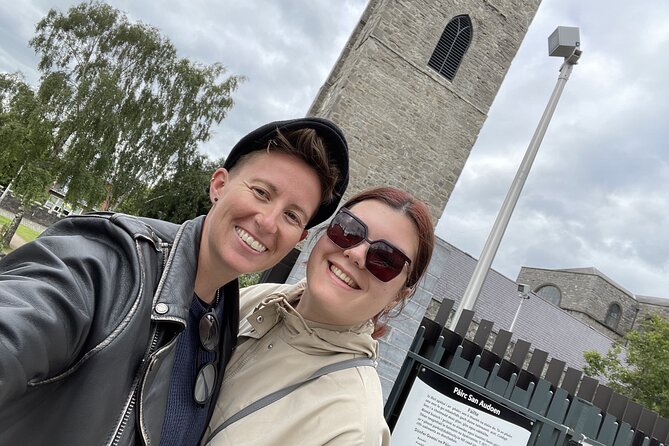
Next you head to the Theobald Wolfe Tone statue, and this stop is where the story starts to feel very Dublin. It is not just a statue you walk past. The game builds the background around Tone as a founding father of Irish republicanism.
You get the key historical thread in a way that supports the puzzle: by 1791, Tone and others formed the Society of United Irishmen, a revolutionary movement meant to oppose British rule and push toward independence. Then the narrative turns, because Tone was captured and died in mysterious circumstances.
Your role is to treat that as a case. The game frames the stop as a spirit summons, and you are challenged to discover what happened to him. Even if you already know Irish history, I like this approach because it forces you to notice small details at the location instead of zoning out through a general explanation.
St. Ann’s Church, Oscar Wilde and Bram Stoker context
After the Wolfe Tone stop, you reach St. Ann’s Church, right in the city center. This is a beautiful change of pace because the game shifts from political mystery to personal, human stories. The key detail here is that many famous people were baptized or married there, including Oscar Wilde and Bram Stoker.
You do not need to be a literature fan to enjoy the connection. The fun part is that Bram Stoker wrote Dracula, and Oscar Wilde is a cultural giant, both rooted in the same Dublin setting. When the game hints at a darker story connected to St. Ann’s, it makes sense, because churches are where big life moments and big secrets both show up.
Practical consideration: churches and city-center sites can have lighting that is great for atmosphere but tricky for reading tiny clues. If you are playing at night, keep your phone brightness up and consider a small torch if you prefer to read quickly.
More ghost walks in Dublin:
- Dublin Ghost Bus Tour with Professional Actors
★ 4.5 · 949 reviews - Haunted Dublin Walking Tour
★ 5.0 · 550 reviews - From Dublin: Gravedigger Ghost Bus Tour
★ 4.4 · 546 reviews - Dublin’s Haunted History Walking Tour
★ 4.3 · 345 reviews
Olympia Theatre imagination games, Bowie to Chaplin
Then the route swings to the Olympia Theatre area, and this stop leans into fantasy. The game plays with what you might imagine you see there, including references to a David Bowie concert or a Charlie Chaplin style iconic scene.
What makes this stop fun is that it is not trying to be strictly academic. It is more like theater history meets ghost story energy. You look around for a missing clue, then you use that to move on to the next checkpoint.
The downside is subtle: if you want strict, fact only history, this is the stop that feels most imaginative. Still, it works well as a break from heavier history topics. It also helps keep attention when you have walked a while and you want something more playful.
City Hall on Parliament Street and Georgian Dublin clues

Your penultimate major landmark is City Hall, located on Parliament Street on the city’s southern side. This stop is all about architecture and city identity. The focus is on Georgian Dublin, and the game connects the building to the wider story of how Dublin has changed over time.
You are pointed toward an interactive multimedia exhibition, which fits the experience style. The game also leans on a Viking angle, since Dublin’s Viking heritage is a major part of the city story. That is where the puzzle idea comes in again, with the promise that the Vikings may have left a hidden message.
If you are a first-time visitor, this is a good moment to slow down and look at the building’s shape. If you are a repeat visitor, it is still worth it because it turns a known landmark into a hunt. Just be aware that multimedia exhibits can have access timing, so if you are playing late, don’t expect everything to be open.
Finishing on the River Liffey with your last puzzle
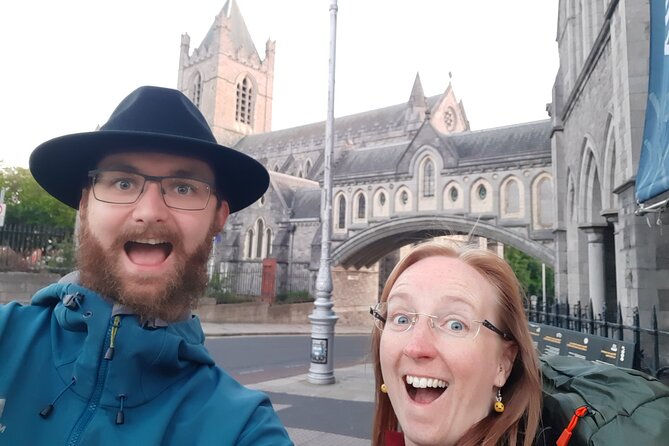
The game closes at 20 Bridge St. Lower, Usher’s Quay, and your final setting is the River Liffey running through Dublin. The river is the geographic spine of the city, separating north and south. The route ends with that classic Dublin viewpoint, where you can look across the water and spot impressive buildings along both sides.
The challenge is not about something far away. It is framed as a clue you can find nearby. That is the nice way these games work when they are done well. You finish the route with something tangible, not just an abstract question.
If you are new to Dublin, this ending is also practical. Ending near the river gives you an easy sense of direction afterward. You can walk back along main roads, rather than feeling like you have to navigate tiny side streets from memory.
Price, value, and who it really suits
For $6.01 per person, this is low cost entertainment that also acts like a mini walking introduction to Dublin. You are not paying for a full guided day, which is why the format works for people who enjoy self direction. If you like history but hate lectures, you’ll probably appreciate the audio stories and short stop structure.
It is also a solid option for groups because it is private, and it offers group discounts. If your group is larger than 15 people, the experience notes that you can book multiple groups rather than trying to squeeze everyone into one session.
Who I think it fits best:
- couples and friends who like light puzzle solving while walking
- first-time visitors who want a quick “see the main landmarks” route
- families, since it is free for kids
Who might not love it:
- people who want a live guide’s constant attention
- people who dislike phone based answers and step by step prompts
- anyone who has weak phone signal, because the app experience depends on your device performing reliably
Staying on track when the app is picky
This is the one area where you should set expectations. The concept is fun, but the execution depends on how smoothly the app works on your phone.
A couple of common friction points show up in real use. One is connection related, even if you expect the app to run fully after download. If your connection is weak at the start, the game might not behave as smoothly as you hoped, so download on Wi-Fi before you go and keep some mobile data as a backup.
Another issue is that answers can be strict. If the game expects a specific casing or exact formatting, small differences can cause frustration. If you hit a wall, use the built in help, then double check how you typed it.
Finally, app progress can be affected if multiple phones are used in the same group. If you are with others, choose a plan. Either one person handles the main device, or everyone keeps their progress aligned from the start so you do not end up backtracking.
Timing matters, especially for night play
Many people seem drawn to doing this in the evening. I get it. Dublin after dark has atmosphere, with street light glow, nearby pub warmth, and monuments that feel more dramatic when the sky is dark.
But timing changes the difficulty. Some locations can have gates locked later in the day, which makes it harder to see what you need for clues. If you want the smoothest run, I’d do it earlier in your trip, ideally when the main stops are likely accessible.
If you do play at night, basic street sense matters. The route is still walkable, but you should plan your return. A practical approach is to know how you get from the finish point back to where you are staying, then use main roads rather than wandering.
Also, allow extra time if you enjoy lingering. Even though the route is about 90 minutes on paper, it is easy to stretch it if you pause often.
A note on guides, storytelling, and audio support
This is listed as having audio stories, and that is what keeps it moving without a physical guide on every step. I like this tradeoff because it lets you wander and still get narrative context.
One review highlight mentioned a guide named Ciarán for storytelling. Since this experience is self guided with audio support, I cannot guarantee every session includes a live storyteller. Still, it tells me the concept works best when the human or audio storytelling tone is sharp and fun.
In your case, test audio early. If your volume is low or your phone muffles sound, the story beats that guide you to clues may feel confusing. Keep headphones ready if you prefer them, but make sure you can still hear the street if you are walking at night.
Should you book the Dublin Ghost Hunt Exploration Game?
Book it if you want a private, low cost Dublin walking experience that mixes landmarks with clue solving. The route hits a strong set of sights, from the museum and the Wolfe Tone story to St. Ann’s Church, the Olympia Theatre, City Hall, and the River Liffey. It is a great fit for people who enjoy exploring at their own pace and like learning through small prompts.
Skip it if you are dependent on a phone that is always connected, or if you strongly dislike games with strict answer rules. Also skip if you want a traditional guide with no app interaction.
If you match the style, you will likely get exactly what this format is designed for: a fun way to see Dublin while you solve a city sized mystery, one checkpoint at a time.
FAQ
How long is the Dublin Ghost Hunt Exploration Game and Tour?
It takes about 1 hour 30 minutes (approx.).
Where does the experience start and end?
It starts at National Museum of Ireland, Kildare Street 35A, Kildare St, Dublin 2, D02 YK38 and ends at 20 Bridge St. Lower, Usher’s Quay, Dublin, D08 WC64.
Is this a private experience or will I join other groups?
This is private, so only your group participates.
Can I start at any time after booking?
Yes. You get full flexibility to start at any hour, and you can stop and resume later.
Do I need a physical tour guide with this?
No. A physical tour guide is not included. The experience uses audio stories and directions inside the mobile app.
What language is it offered in?
The experience is offered in English.
Is there a refund if I cancel?
Yes, there is free cancellation. You can cancel up to 24 hours in advance for a full refund.
Newest Dublin reviews
- Giants Causeway with Private Chauffeur Day Tour from Dublin★ 5.0 · 23 reviews
- Dublin Private Walking Tour | 3 hour Highlights & Hidden Gems★ 5.0 · 23 reviews
- Taste traditional Irish food in the heart of Dublin★ 5.0 · 24 reviews
- From Dublin:Cork,Cahir Castle,Rock of Cashel Tour in Spanish★ 4.5 · 24 reviews
- 4 Hour Private Dublin City Sightseeing Tour ( 1-7 People)★ 5.0 · 25 reviews
- Scogliere di moher e Galway in italiano★ 4.5 · 25 reviews
- Dublin: Forge Your Own Silver Claddagh Ring Workshop★ 5.0 · 25 reviews
- Luggage Storage Dublin★ 5.0 · 26 reviews
Ghost Tours, compared.



Hidden Dublin: Haunted History Walking Tour v2.0 2026
Read our review →

Browse the lists this tour appears in