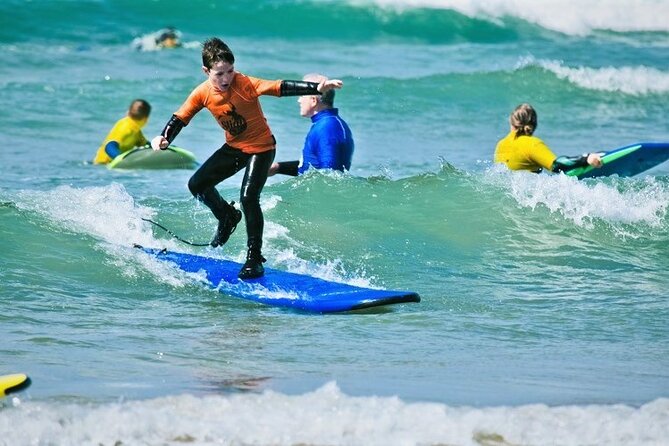
Reviewed · GUIDED
Sligo surfing. Sligo. Guided. 2½ hours
Sligo surf lessons are interesting because you’re learning on Ireland’s Wild Atlantic Coast, where the swell is consistent enough to help beginners get real practice. The setting also feels special in a practical way, you’re not guessing when or where the ocean will cooperate.
I really like the small-group setup, it means you get more direct feedback instead of standing around. I also love that the instruction includes helpful support for different needs, like one recent class where the monitors made an effort to communicate in French for francophone kids, and that same review called the cabins and showers clean and comfortable.
The main thing to consider is that this is weather dependent, and you should plan around surf conditions changing. Also, it’s an ocean activity, so it’s advisable that you can swim.
Key things I’d plan for before you go
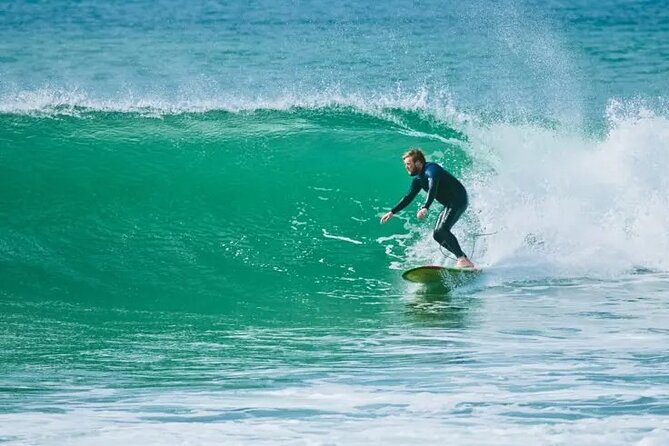
- Strandhill Beach, a reliable surf location on the Wild Atlantic Way
- Land coaching first, then you hit the waves with guidance
- Small groups (max 15), so you’re not lost in the crowd
- All equipment provided, which keeps your prep simple
- Weather dependent classes, so flexible expectations help
- Safety first, with an emphasis on being comfortable in the water
Sligo surfing at Strandhill Beach: what makes it a smart learning choice
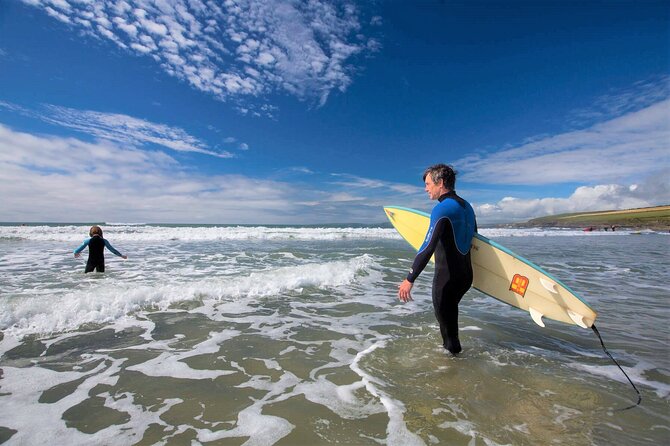
This surf lesson makes sense for first-timers and for people who’ve already stood up. The big reason is the local wave pattern. The Sligo coast is known for slow, regular rolling movement, waves that don’t just crash instantly, which gives you more chances to time your board and try again.
It also helps that the area has a reputation for consistency. The info notes Sligo’s surf coast has the most consistent swell in Europe and even holds the record for the largest wave surfed in Ireland. You do not need to chase giant waves on day one. But knowing the coast can produce steady surf is exactly what improves your odds of actually surfing, not just waiting.
And if you’re hoping to learn more than one skill, this lesson is built for it. You’ll do land-based technique work first, then apply it in the water. That sequence matters. It turns surfing from a random thrill into something you can understand and repeat.
Your 3-hour lesson block: how the time usually runs
Even though the experience is listed as about 2.5 hours, the lesson itself is described as lasting around 3 hours when you include check-in time. Plan your day as roughly a half-day block, and don’t stack tight appointments right after.
Here’s what that time structure is designed to do:
First, you check in and get ready with your instructor team. Then you get technique instruction on land. This is where you learn what you’ll try in the water, the basics of movement, positioning, and how to respond when conditions change.
After that, you move into the water for your surfing and bodyboarding time. The lesson is meant to be safe and fun, but it is still real ocean time, so you’ll want to bring an attitude of learning, not perfection.
The other time reality is weather. Classes are weather dependent. That doesn’t mean the provider cancels for every breeze, but it does mean you should be mentally ready for conditions to decide the schedule.
Step-by-step itinerary: what happens at Strandhill Beach
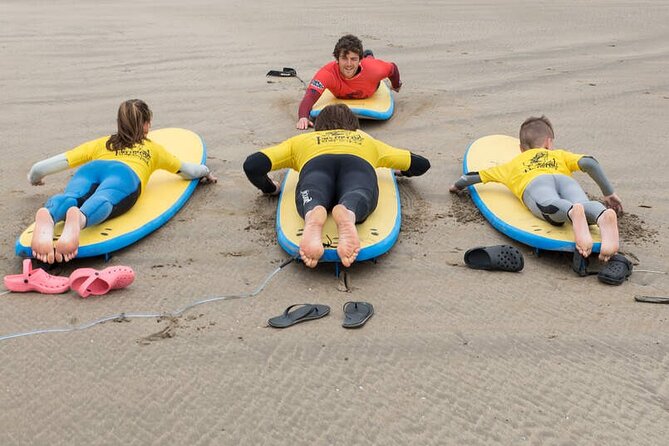
Your session is based around one main surf stop: Strandhill Beach. That matters because you’re not bouncing around between locations. Fewer moves means more time getting coaching and improving.
At the beach, the coaching approach is straightforward. You’ll practice beginner skills first, then work up from there. The info specifically says instructors will show novice surfers how to catch their first wave in a few easy steps in a safe, fun environment.
If you’re already surfing, you’re not just paying for gear. You’re paying for corrections and refinements. The description says the team helps all surfers improve their skills, so the lesson isn’t only about standing up. It’s about controlling what happens next, like how you line up and how you respond when the wave speed changes.
A useful detail: bodyboarding is mentioned alongside surfing. That’s a smart way to keep beginners engaged while still building ocean awareness. It can also help you feel more confident with wave timing before you fully commit to surfing balance.
Meeting point at Carrowbunnaun, Co. Sligo: what to expect logistically
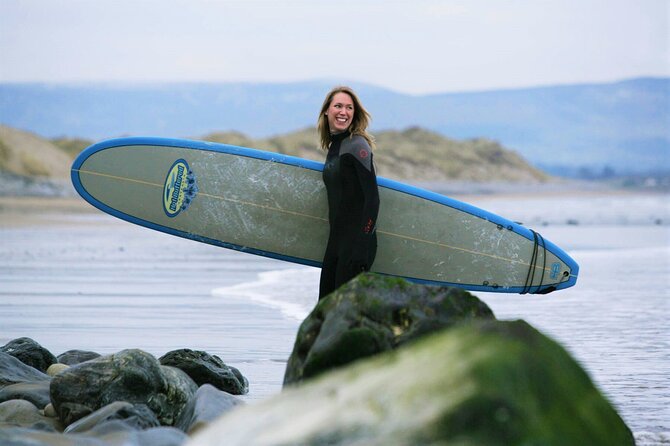
The meeting point is Carrowbunnaun, Co. Sligo, F91 XH50, Ireland. The start time listed is 12:00 pm, but the experience also says you can choose from several class times to fit your schedule.
You also end back at the meeting point, so you’re not dealing with a drop-off and pick-up puzzle. That’s a small thing, but it reduces stress when you’re traveling.
The info also says it’s near public transportation. I can’t tell you exactly how convenient it is from your hotel, but it’s a good sign if you don’t want to rely entirely on a car in Sligo.
Last, you get a mobile ticket. That’s exactly what you want for a surf lesson, less paper, fewer chances to misplace something when you’re distracted by water gear and weather.
Small-group coaching: more attention, less waiting around
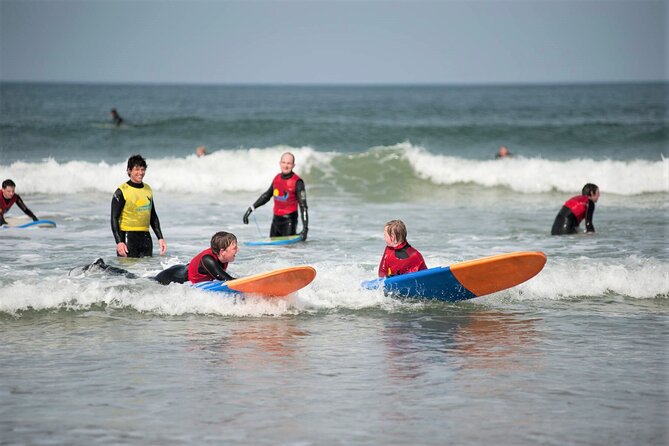
This class is capped at a maximum of 15 travelers. In practice, that usually means your instructor can actually see what you’re doing, not just give broad tips.
The description is clear about the benefit: a small group means more attention from your instructor. I like that because surfing is one of those sports where the difference between progressing and staying stuck is often a small correction. A better stance. A change in timing. A quick reminder on what to do when the wave doesn’t break the way you expected.
The most praised aspect in a recent review was how attentive and caring the instructors were. That same review also noted the monitors made an effort with language for francophone kids. I can’t guarantee that specific language support every single time, but it tells you the team is paying attention to the needs of the group, not running a one-size-fits-all program.
Also, equipment matters in surfing. One review specifically said the gear was in good condition. That makes a difference for safety and comfort, and it helps you focus on learning instead of fighting a board that doesn’t feel right.
Equipment provided: what you should still bring for comfort
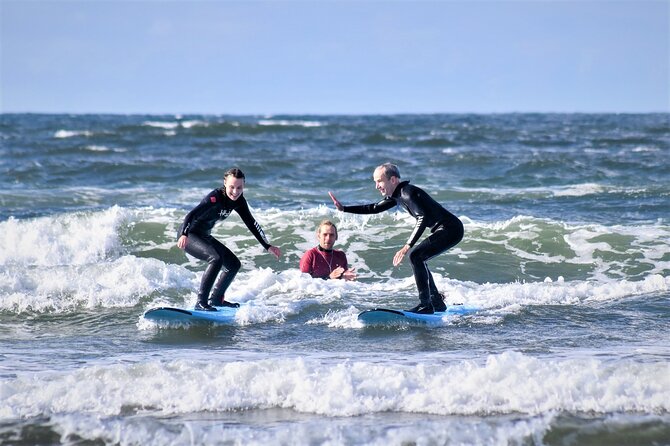
All necessary surfing equipment is provided. That’s a big value point because it saves you the hassle and cost of renting or buying gear.
What you still need to think about is comfort and water readiness. The info advises that it’s advisable to be able to swim, which is standard for ocean activities. Even if you’re nervous, the coaching format is designed to keep things safe and progressive, but your comfort in the water still matters.
One review also mentions showers and cabins that were clean and comfortable. So after you’re done, you’re not stuck on the beach with no place to reset. That kind of basic comfort is worth something, especially if you’re traveling.
When weather changes the plan, here’s how to handle it
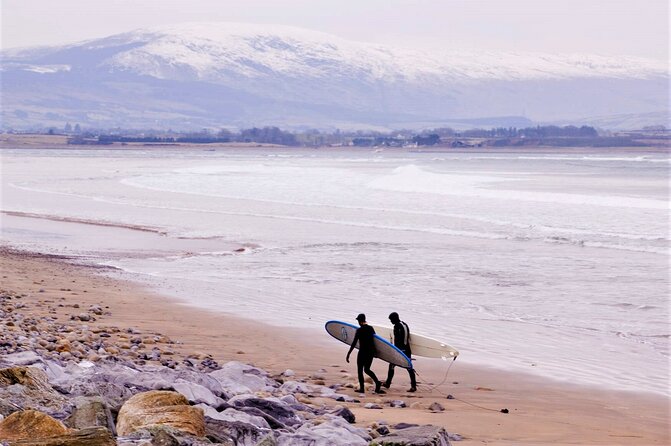
Surf lessons depend on conditions, and this one is explicitly weather dependent. That means you might face schedule adjustments if conditions aren’t right.
Here’s how I’d handle it like a pro:
- Pick the class time that gives you a little buffer in your day.
- Keep your expectations flexible. The lesson is designed to go out only when it’s appropriate.
- If the class gets canceled due to poor weather, you’re offered a different date or a full refund.
That’s not just paperwork. It’s part of the safety system. If the ocean or wind is wrong, no one benefits from forcing it.
Price and value: is $101.71 for a guided surf session fair?
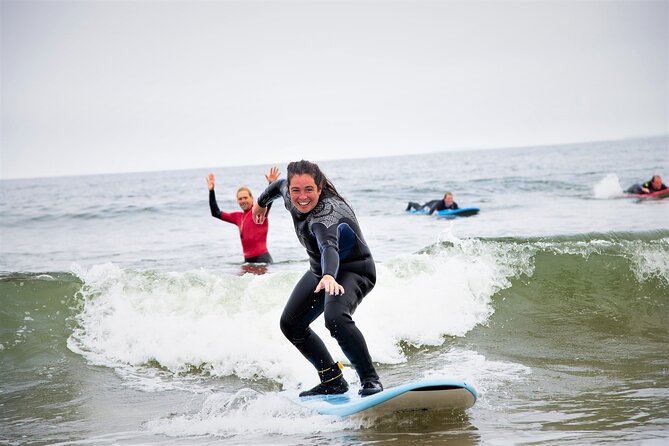
At $101.71 per person for a guided Sligo surf lesson, the value comes from three things you can’t easily DIY: instruction, small-group coaching, and included equipment.
You’re getting:
- Land coaching before you hit the water
- A guided session at a consistent surf coast
- Equipment provided
- A group limit of up to 15 people, which helps the coaching be more personal
When you compare that to typical costs of rentals plus lessons separately, this pricing starts to look reasonable, especially if you’re a true beginner. If you’re someone who’s tried surfing before and still wants technique fixes, the small-group feedback can also be worth it. You’re not just paying for time in the water, you’re paying for correction and safer progression.
The only value-risk is weather. Because it’s weather dependent, your time is at the mercy of the ocean. But the refund or reschedule option helps you protect your plans.
Who this Sligo surf lesson fits best
This experience is designed for surfers of all levels, including total beginners and people who want to improve technique. That broad fit comes from the instruction approach: beginners learn first-wave basics, and everyone else gets skill improvements.
It’s a strong pick if you:
- Want to try surfing in Ireland without guessing where to start
- Prefer guided coaching with equipment provided
- Like the idea of a smaller group where you can get feedback
It’s especially good if you learn best when you can practice steps in order. Land drills followed by water application is a practical method for a sport that can feel chaotic on your own.
And if you’re traveling with kids or French-speaking family members, the recent review is encouraging. One class included effort to support francophone kids, which suggests the team is willing to adapt to the group.
Should you book this guided Sligo surfing session?
If your goal is a proper learning experience, not just a quick splash, I’d book it. The standout features are the small-group attention, equipment included, and the structured coaching that starts on land. The Strandhill Beach focus also reduces the feeling of a rushed, scattered outing.
I’d think twice only if you’re completely inflexible about scheduling due to weather dependency, or if swimming is not currently comfortable for you. Since the info says it’s advisable to be able to swim, it’s better to be honest with yourself before you commit.
Overall, this is a solid value option for anyone who wants to learn surfing on Ireland’s Wild Atlantic Coast in a way that feels guided and safe.
FAQ
How long is the Sligo surfing guided lesson?
The experience is listed at about 2 hours 30 minutes, and the surf lesson itself is described as lasting 3 hours including 30 minutes of check-in time.
Where does the lesson take place?
The surf lesson is based at Strandhill Beach in Sligo.
What is the meeting point and where does it end?
You meet at Carrowbunnaun, Co. Sligo, F91 XH50, Ireland, and the activity ends back at the meeting point.
What time does it start?
A start time of 12:00 pm is listed.
How big is the group?
The activity has a maximum of 15 travelers.
What is included in the lesson?
All necessary surfing equipment is provided, and you get guided instruction.
Is the lesson suitable for beginners?
Yes. Instructors teach novice surfers how to catch their first wave, and surfers of all levels are welcome.
Do you go on land before you hit the waves?
Yes. You learn surfing techniques on land before hitting the waves.
Is swimming required?
It’s advisable to be able to swim, since this is an ocean water sport.
What happens if the weather is poor?
Classes are weather dependent. If canceled due to poor weather, you will be offered a different date or a full refund.
Is there free cancellation?
Yes, you can cancel up to 24 hours in advance for a full refund.
Guided, compared.

Dublin Highlights and Hidden Gems Guided Walking Tour
Read our review →
Dublin to Glendalough, Wicklow and Kilkenny Full Day Guided Tour
Read our review →
Dublin Book of Kells, Castle and Molly Malone Statue Guided Tour
Read our review →
The Little Museum of Dublin Famous Guided Tour
Read our review →
Full-Day Cliffs of Moher & Burren Guided Tour
Read our review →
Dublin Jameson Distillery and Guinness Storehouse Guided Tour
Read our review →
Dublin to Rock of Cashel, Cork City & Blarney Castle Guided Tour
Read our review →