
Reviewed · WALKING TOURS
Dublin Highlights and Hidden Gems Guided Walking Tour
Dublin on a short timeline needs a plan, and this walk delivers one. You get a tight loop through major landmarks, plus the small stories that make them feel human, like how Dublin Castle links Viking days to independence, or why Christ Church is tied to legend and lore. I also love the pacing and focus, it is not a random stroll. Two spots I really like are the River Liffey bridge views and the Trinity College finish, right where your eyes naturally want to go next. The main drawback to consider is timing and access, because some big sites can close at certain times and the tour requires good weather.
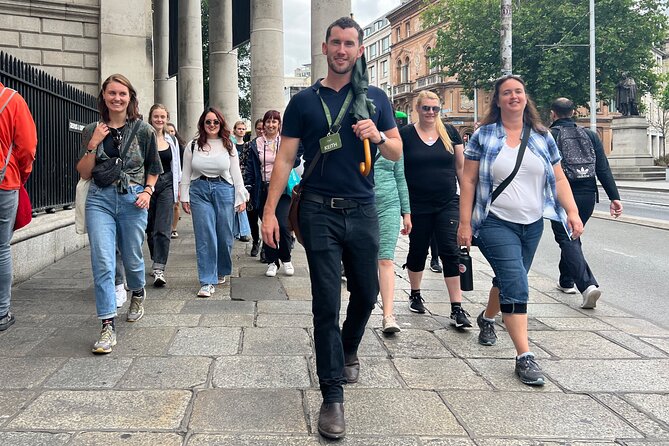
What makes this experience work is the way the guide turns street corners into context. Guides like Helena, Emily, Karl, Keith, Dave, Barry, Deirdre, and James are repeatedly praised for keeping things lively with humor and clear explanations, so you can follow the thread without studying Irish history first. And because the walk is built for a small, capped group (max 30), it is easy to ask questions along the way and get practical recommendations, not just facts.
Key Points You Will Actually Care About
- A fast “orientation loop” through Temple Bar, Dublin Castle, Christ Church, and Trinity College in about 2 hours
- Free admission included at each listed stop, so you are not surprised by extra entry costs
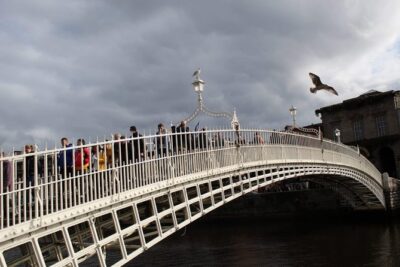
- River Liffey photo stops at Ha’penny Bridge and O’Connell Bridge that also get historical context
- Irish lore mixed into history at places like Christ Church and Dublin’s older cultural venues
- Clear end point outside Trinity College, ideal for continuing your day without backtracking
- Guide-led storytelling that people consistently mention, including humor and helpful local tips
Getting Oriented: Temple Bar Meets Viking and Medieval Dublin
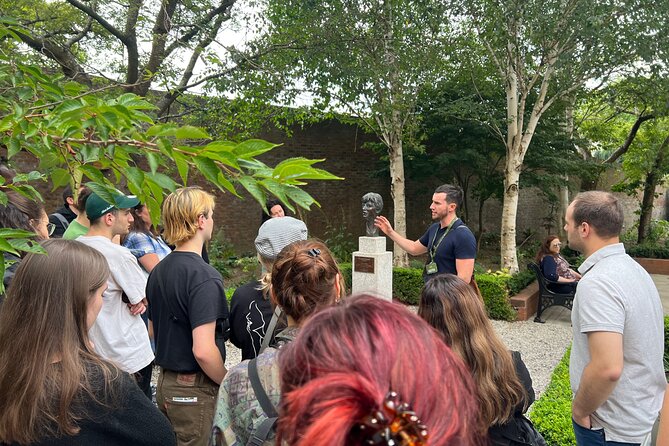
You start in Temple Bar, right in the center where Dublin’s modern reputation is loud and obvious. The tour begins here for a reason. Temple Bar is a cultural hub, so it is the perfect place to set the tone: what Dublin has been doing for centuries, who it has attracted, and how the city’s identity changed over time.
From this starting point, the walk quickly connects past and present. You get history about Temple Bar itself and a sense of where key sights sit in relation to each other, so the rest of the city feels easier to navigate later. If you are arriving with jet lag, this start matters because you leave with a mental map, not just photos.
And yes, you will pass the famous Temple Bar pub. Even if you do not go in, it is a useful landmark for orienting yourself, and the guide typically points out nearby things you may want to see after the tour. That is one of the small value-adds you feel throughout.
More Walking Tours in Dublin
- Dublin: Highlights and Hidden Gems Walking Tour
★ 4.9 · 2,140 reviews - 1916 Rebellion Walking Tour
★ 5.0 · 1,605 reviews - 90 Minute Dublin Walking tour and Sightseeing tips
★ 5.0 · 916 reviews
Dublin Castle Grounds: Where the Stories Pivot from Viking Days to Independence
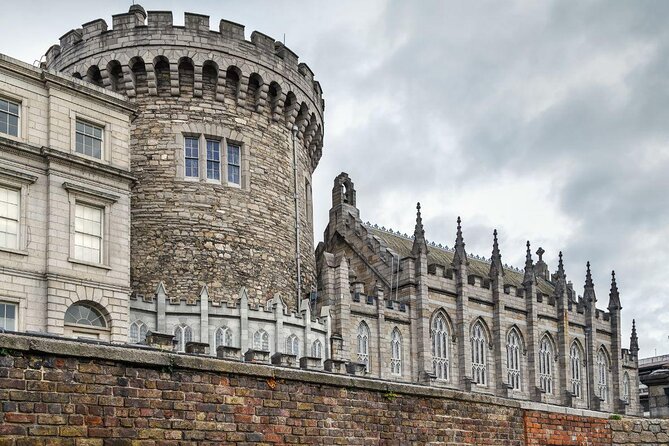
Next comes Dublin Castle, one of those places where the building is the headline, but the real magic is the sequence of eras. The tour frames Dublin Castle as an ongoing power center, stretching from early origins through conquest and occupation, and then into Ireland’s hard-fought push for independence.
What you get in the time allotted is a grounded walkthrough of the grounds. The guide focuses on roles the castle played in Irish history, key characters who frequented the place, and some lesser-seen curiosities that you might miss if you were wandering alone.
Why it is valuable for you: Dublin can feel like a lot of separate attractions. Dublin Castle gives you a backbone. After this stop, other dates and names start to connect, and your second day in the city becomes less “where is everything?” and more “oh, this links to that.”
Practical note: the tour includes free admission ticket for the castle stop, which makes it a smart “hit” early in the walk. If you want to see something historic without paying additional entry fees, this matters.
Christ Church Cathedral and Smock Alley Theatre: Lore, Tombs, and Old Stages
Then you move into the heart of Dublin where history stacks up quickly. Christ Church Cathedral is introduced as a site at Dublin’s core for about 1,000 years. The guide highlights the main pull of the building, but it also leans into the stories that help the place stick in your memory.
In the time you have, you learn about details tied to people and legend, including the tomb of Strongbow and the heart of Lorcan O’Toole. You also hear the type of local lore that makes a cathedral feel more like living city mythology than “just a church.” There is also mention of the cat and the rat, which is the kind of clue that tells you the guide is going beyond dates and into the quirky parts of Dublin’s identity.
Next up is Smock Alley Theatre, described as Ireland’s oldest theatre and linked to Temple Bar since 1662. This is one of the stops I would call a “less obvious win.” You get the long arc of the building’s use, moving between different roles, including time as Theatre Royal and later returning to theatre life. The guide also points out how writers, directors, and actors have been supported or connected to the place over time.
Why you will likely enjoy this pairing: Cathedral plus theatre gives you two kinds of Dublin culture. One is sacred and ceremonial. The other is community and performance. Together they make the area feel like a real creative district across centuries.
Temple Bar Pub Pass-By: A Landmark for Your Photos and Your Next Move
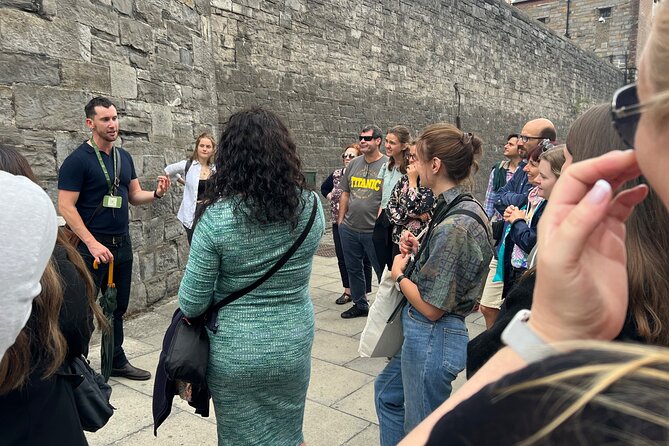
The tour makes a short stop at the Temple Bar pub, essentially the quick “you are here” moment. The emphasis is on Dublin’s most famous and photographed pub, and it is framed as an iconic point in the city center.
Even if you do not plan to drink during your walk, the pass-by is useful. It gives you a reference point for later, so when you come back for dinner or a pint, you feel like you have control. It is also a fast way to see what people mean when they say Temple Bar is the face of Dublin.
One small thing to consider: if you hate crowds, you might want to keep your expectations realistic around any time the area is busy. This is a central sightseeing zone, so plan to treat this moment as a landmark, not a quiet experience.
If this is not quite it, Dublin also does these:
- Dublin to Cliffs of Moher, including Wild Atlantic Way and Galway
★ 5.0 · 23,331 reviews - From Dublin: Cliffs of Moher, Burren & Galway City Day Tour
★ 4.8 · 18,888 reviews - Dublin: Guinness Storehouse Entry Ticket
★ 4.6 · 16,863 reviews - Dublin to Cliffs of Moher, Burren, Wild Atlantic Way, Galway Tour
★ 5.0 · 12,924 reviews
Ha’penny Bridge to O’Connell Bridge: The River Liffey in Two Time Periods
After the cathedral and theatre area, the walk shifts to the River Liffey. This is where the tour becomes instantly more fun, because bridges are visual, and Dublin’s bridges are designed for postcards.
At Ha’penny Bridge, the guide focuses on its role since 1816 and its fame as a Georgian gem of a footbridge. You will also hear a set of surprising connections tied to its history, including its link to the battle of Waterloo and even a few modern pop-culture references people have attached to it over time.
Then you move to O’Connell Bridge. This one gets framed differently. Instead of the “pretty bridge moment,” the guide ties it to historic events that happened nearby and to the person it is named after. You get a wider angle for seeing how Dublin’s national moments play out in city space.
Why this part works for you: bridges are where your brain naturally wants to connect the dots. The River Liffey is Dublin’s main spine, and once you see it from two bridge perspectives, the city layout makes more sense.
College Green Oddities: The Quiet Power Center of Georgian Dublin
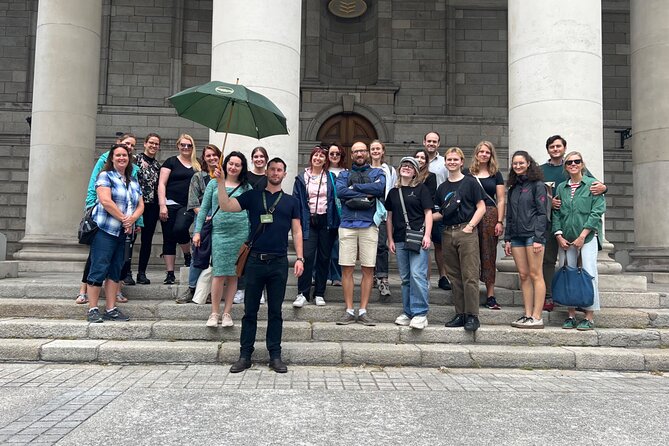
Next is College Green, described as the old center of Georgian Dublin. This stretch is a classic “big buildings, big stories” zone, but the tour approach here is what makes it worthwhile: the guide points out lesser-mentioned oddities along the thoroughfare.
That phrasing matters because it explains the payoff. You are not just looking at what is famous. You are learning what is a little bit off the usual path, which is exactly how you turn a standard sightseeing loop into a memorable one.
College Green also sets you up for the final stop. It acts like a runway to Trinity College, so the end of your walk does not feel abrupt. Your eyes already want to go toward campus buildings and gates.
Trinity College Dublin Finish: Book of Kells Energy, Without the Guesswork
The walk ends directly outside Trinity College at the front gate. That is a smart ending point, because Trinity is the one sight people most want to reach, and finishing here means you can keep going immediately.
Trinity is introduced as Ireland’s oldest and most famous college, and the guide focuses on the draw that most visitors travel for: the beautiful library that houses the Book of Kells, plus other notable collections like the Brian Boru Harp.
Even if you do not go inside on this specific walk, the value is that you understand why Trinity matters and what you are looking at when you arrive at the gate. That changes your next steps. Instead of wandering, you choose your time.
If you are building a two-day plan, this ending is especially helpful. It gives you a strong geographic anchor in central Dublin, and it is easy to roll into nearby walks and cafés afterward.
Price and Timing: Why This 2-Hour Tour Feels Like Good Value
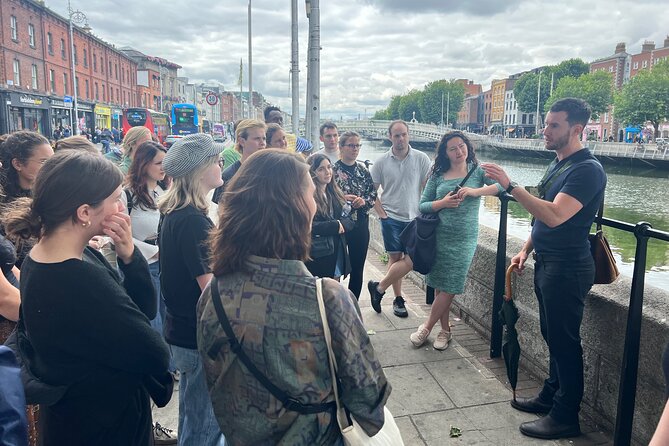
At $29.02 per person for about 2 hours, this tour lands in the “worth it for the orientation” category. The biggest reason is not just that it is low priced. It is that the walk packs multiple high-demand stops into one guided route, and each listed stop includes a free admission ticket.
You also get something that is hard to price: direction. In Dublin, it is easy to spend time walking without learning how things connect. Here, the guide gives the bridge between sites, so you feel like you are spending your time, not just moving through it.
Timing matters too. Tours are booked about 30 days in advance on average, so if you want a specific day, you should reserve early instead of hoping for a last-minute slot.
What Makes the Guides So Often Mentioned
If you have looked at many city tours, you know the difference between a guide who recites facts and a guide who tells stories you can remember. The guide style on this walk shows up again and again in the way people describe the experience.
Several named guides are singled out for energy, humor, and the ability to make Dublin’s past feel like it is talking to the present. Karl, Keith, Dave, Barry, Helena, and others are repeatedly praised for being friendly and for keeping the pace comfortable, including for people who might not want to sprint between stops.
I also like that the guide approach seems tailored to the group. One person noted the tour was adjusted for cold weather, which is the kind of practical flexibility you want when you are outdoors. Another noted that the tour connected Ireland’s history to what is happening now, which is how the city stops feeling like a textbook and starts feeling like a place.
Finally, you get recommendations along the way, including ideas for where to spend your next hours in Dublin. That can save you time hunting for good options after the tour ends.
Practical Fit: Who This Walk Is Best For
This tour is built for most travelers and is capped at 30 people. That cap usually means you are not lost in a sea of strangers. If you like structured wandering, you get just enough guidance to explore confidently after.
It is also a good choice if you want a first-day plan. The walk hits major sights, gives historical grounding, and ends at a place you will likely want to revisit.
It is less ideal if you want a slow, sit-down tour with lots of free time in each building. The format is a walking overview. You are there to learn the thread, not to spend half your day inside a single complex.
And if weather is gloomy, the tour still runs, but the experience depends on good weather overall. Keep that in mind, especially if you are traveling in winter or around holidays.
Should You Book This Dublin Highlights and Lesser-Known Stops Tour?
Yes, I think you should book it if you want a smart first pass through central Dublin. For the money, you get a structured route through Temple Bar, Dublin Castle, Christ Church Cathedral, Smock Alley Theatre, two major bridges, College Green, and a Trinity College finish. That is a lot of landmarks in a single guided loop.
Book it especially if you like history that includes human details, like tombs, named figures, and the stories that turn famous places into more than postcards. And if you appreciate a guide who can keep things fun and clear, this tour is a strong fit.
Skip it if you are hoping for guaranteed indoor access at every major site during peak holiday closures, or if you plan to travel only on days where weather is likely to be miserable. In those cases, you might want a flexible plan alongside your booking.
FAQ
How long is the Dublin Highlights and lesser-known stops guided walking tour?
It is approximately 2 hours.
Where does the tour start and end?
It starts at The Old Storehouse Bar and Restaurant on Crown Alley in Temple Bar, and it ends at 27 College Green, finishing directly outside the front gate of Trinity College.
What language is the tour offered in?
The tour is offered in English.
Is there admission included for the stops?
The listed stops note admission ticket free for each location included on the route.
Is the tour limited to a certain group size?
Yes. The tour has a maximum of 30 travelers.
Is a mobile ticket provided?
Yes, the tour uses a mobile ticket.
What if the weather is bad?
This experience requires good weather. If it is canceled due to poor weather, you will be offered a different date or a full refund.
What is the cancellation policy?
You can cancel for a full refund up to 24 hours in advance. If you cancel less than 24 hours before the start time, you will not receive a refund.
Is service animal access allowed?
Yes, service animals are allowed.
How early should I book?
On average, this tour is booked about 30 days in advance, so booking ahead is a good idea.
Newest Dublin reviews
- Dublin: Traditional Pubs Walking Tour with Local Guide★ 4.9 · 112 reviews
- Dublin: Cliffs of Moher, Ennis, & Bunratty Castle Day Tour★ 4.9 · 113 reviews
- Meet and Eat Dublin: Dublin Food Walking Tour★ 5.0 · 115 reviews
- Small Group-Dublin Walking Tours★ 5.0 · 116 reviews
- A Silent Disco Walking Tour★ 5.0 · 118 reviews
- 3-Day Southern Ireland Tour Including Galway and Kerry from Dublin★ 4.5 · 123 reviews
- From Dublin: Wicklow, Glendalough, Waterfall & Sheepdog demo★ 4.5 · 126 reviews
- Dublin: Guinness Storehouse Connoisseur Experience★ 4.8 · 123 reviews
Walking Tours, compared.


90 Minute Dublin Walking tour and Sightseeing tips
Read our review →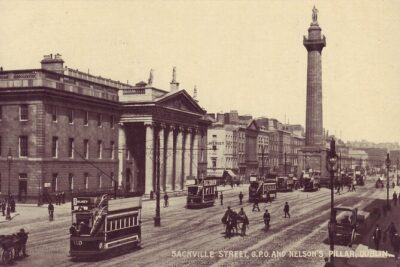

Historical 2-Hour Guided Walking Tour of Dublin
Read our review →
Dublin Traditional Irish 3 Course Meal Walking Tour with Local
Read our review →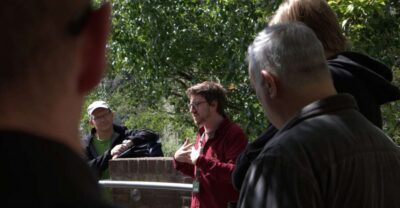
Browse the lists this tour appears in