

Reviewed · WALKING TOURS
1916 Rebellion Walking Tour
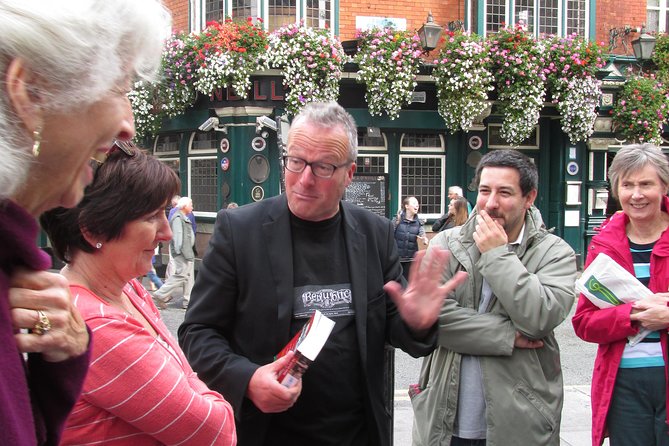
Dublin has a way of keeping history close to the street. This walking tour is interesting because it follows the build-up to the 1916 Easter Rising through real locations you can look at up close, not just dates on a page. I love the way the story starts with the Great Hunger and then carries you forward step by step to the Rising. Lorcan Collins has been running this 1916 Tour since 1996, starting right at the International Bar.
Second, I like that you get a landmark-to-landmark narrative: City Hall, Dublin Castle, the Four Courts area, and especially the GPO where Pearse read the Proclamation. If you want the human side of Irish politics, you also get plenty of room for questions, and some guides add poetry or rebel songs at moments that fit the scene.
One possible drawback to keep in mind: the tour is listed at about two hours, but if you get a talkative group or lots of questions, it can run longer.
Key things that make this walk worth it

- International Bar start: You begin at 23 Wicklow St and can come early for a drink and the intro reading.
- A clear timeline: The guide connects the famine era (1840s) to the revolution in 1916 so it makes sense fast.
- Street-level evidence: You’ll pause for details you can actually see, like bullet holes on the O’Connell Monument.
- Major Dublin power centers: GPO, Dublin Castle, and the old political-administration buildings all get their place in the story.
- Flexible routing: The walk can vary day to day so it does not feel copied and stale.
- Optional atmosphere add-ons: Alcohol is available to purchase, and some guides include songs or poetry.
Dublin’s 1916 Rebellion walk: why it connects the dots fast
This tour works best if you want context without a textbook vibe. You start with the roots of the revolutionary period, then you move through the places where events unfolded. By the time you reach the big names of Easter Week, the speeches and decisions stop feeling abstract.
I also like that it is built for both beginners and history fans. You do not need to know Irish politics to follow along. At the same time, if you are the sort who notices details and wants background, the guide’s answers give you that extra layer.
Finally, the tone tends to be conversational. The walk does not feel like a lecture you escape from. Instead, you’re walking, looking, and asking questions while the guide ties each stop back to the wider story.
More Walking Tours in Dublin
- Dublin Highlights and Hidden Gems Guided Walking Tour
★ 5.0 · 6,020 reviews - Dublin: Highlights and Hidden Gems Walking Tour
★ 4.9 · 2,140 reviews - 90 Minute Dublin Walking tour and Sightseeing tips
★ 5.0 · 916 reviews
Meeting at the International Bar on Wicklow Street
You meet at 23 Wicklow St, Dublin at the International Bar. It is more than a convenient starting point. This is the place where Lorcan Collins has been running the 1916 Tour since 1996, so the whole experience starts with a local, lived-in Dublin feel.
A smart move is to arrive a bit early. You can grab a drink there, and you’ll also have introductory literature available to read before the walk officially begins. That little head start helps you settle in, and it also makes the early storytelling hit harder.
The tour uses a mobile ticket. That’s helpful in Dublin, where you’ll often be bouncing between transit, street crossings, and quick stops. You’re not stuck hunting for paper.
How the guide sets the stage, famine to rebellion
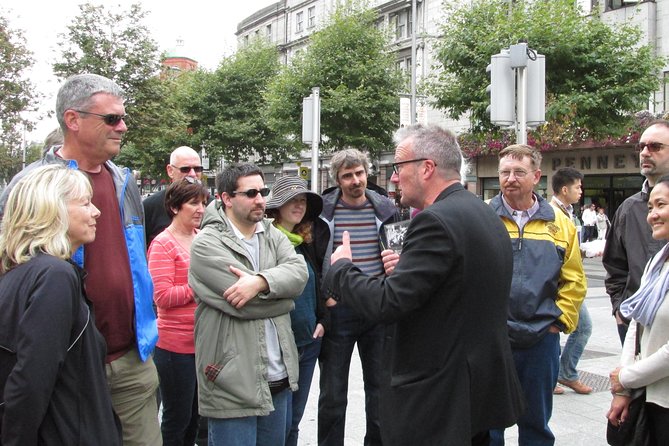
Before you start walking, you get a short introduction that builds the timeline. It starts with the Great Hunger or Irish Famine in the 1840s, then moves you toward the revolutionary period culminating in the 1916 Rising.
This matters because 1916 did not come out of nowhere. When you hear the build-up laid out in plain language, the later events at the GPO, Dublin Castle, and other sites become easier to understand. You’re not memorizing landmarks, you’re learning why those particular buildings mattered to the people involved.
It’s also a good moment to ask questions and get comfortable with your guide. Many tours rush you out the door. This one slows down first, and that makes the whole two hours feel less like a sprint.
City Hall: where the Irish Citizen Army enters the story
One of your early stops is City Hall, where the Irish Citizen Army was active during the Rising. You pause, you look at the area, and the guide explains how this fits into Easter Week 1916.
This is the kind of stop that helps you picture Dublin during the Rising. Not everything is dramatic gunfire at the steps of a famous building. Sometimes the story is about control, pressure points, and who held what and when.
The stop is brief, but it’s enough to connect City Hall to the wider conflict, without turning it into a long detour.
If this is not quite it, Dublin also does these:
- Dublin to Cliffs of Moher, including Wild Atlantic Way and Galway
★ 5.0 · 23,331 reviews - From Dublin: Cliffs of Moher, Burren & Galway City Day Tour
★ 4.8 · 18,888 reviews - Dublin: Guinness Storehouse Entry Ticket
★ 4.6 · 16,863 reviews - Dublin to Cliffs of Moher, Burren, Wild Atlantic Way, Galway Tour
★ 5.0 · 12,924 reviews
Dublin Castle: British administration in the middle of it all
Next comes Dublin Castle, the site tied to British administration controlling Ireland. The guide explains its role in the 1916 Rising and later in the War of Independence.
If you know Dublin Castle from the Michael Collins film, you’ll recognize the vibe. But on this walk you get the political logic behind what you’re seeing. Why it mattered. How it fit into the larger struggle.
The practical win here is that you get to see this heavyweight landmark from street level without paying for a long museum-style visit. You still come away with a sense of how power worked during the revolutionary period.
Four Courts: why the bridge view is the smart one
You’ll also get to the Four Courts area. The Four Courts was occupied in 1916, and it was again part of the lead-up to the Irish Civil War in 1922.
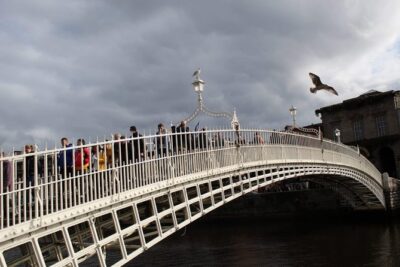
Here the tour takes a practical approach. Instead of climbing or crowding around the building, you view it from a bridge over the River Liffey. That makes the stop safer and often more comfortable, especially in busy city traffic patterns.
The guide explains the role Four Courts played, then works out the tricky links between 1916 and the later civil conflict. That “how did we go from this to that” piece is exactly what makes the walk more than just landmark sightseeing.
O’Connell Monument: bullet holes and the chilling details
One of the most striking stops is at the O’Connell Monument, where the tour looks at bullet holes and talks through where the British and Irish forces stood in 1916.
Seeing the marks on stone is the type of detail that makes history feel immediate. You’re not hearing about events in the abstract. You’re standing in the city where the aftermath is still visible.
This stop also gives you a break from pure buildings. It turns the story into something you can literally inspect, which helps your brain lock in the timeline.
Jim Larkin statue: a working-class viewpoint
Then comes Jim Larkin’s statue, tied to Big Jim Larkin and his work as a Union man, closely connected with James Connolly and support for the Dublin working class.
This is a stop I appreciate because it prevents the Rising from becoming only about leaders and official locations. You get a sense of the social forces behind the political revolution.
If you care about labor history, community organizing, and how everyday politics turns into major upheaval, this is one of your best pauses on the route.
The GPO: the emotional center at the heart of Easter Week
The biggest and most important stop is the General Post Office, the GPO. This is described as the HQ for the revolutionaries in Dublin, and it’s one of the most historic buildings in the city for Irish national memory.
You’ll get an explanation of the unfolding events of Easter 1916, and you’ll also hear about P. H. Pearse reading the Proclamation there. That single detail helps everything click. It’s the moment where a political plan becomes a public statement meant to be remembered.
Plan to give this stop your full attention. The time here is longer than most stops, and it’s the place where the tour tends to hit a more reflective mood, even when the guide keeps things lively.
Also, this stop includes free on-site viewing, so you can focus on learning without getting pulled into extra entry fees.
Moore Street: the last stand connection
Depending on time, you may continue to Moore Street. When the route fits, this is where the GPO garrison made their last stand in Easter Week.
This is a stop that feels like a closing chapter. You’ve already learned where the revolutionaries announced themselves at the GPO. Now you connect that to where the endgame played out.
It’s not always guaranteed, since the route can flex, but it’s worth keeping an eye out for it as part of your “what if we have time” moments.
The Bank of Ireland area: old parliament ties and nearby landmarks
Later you may stop by the Bank of Ireland, which is more colloquially known as the Old Parliament. The guide may point out its role in Irish history and also discuss its neighbor, Trinity College.
This kind of stop helps you see how layers of governance and education sat side by side in Dublin. Even when the tour’s focus stays on 1916, it’s useful to understand how the city’s institutions shaped political attitudes over time.
Like other parts of the walk, the exact emphasis can vary based on your guide’s route and your group’s pacing.
Timing, group size, and what can make it feel longer
The tour is listed at about two hours. Still, do yourself a favor and build in extra time in your day. One common friction point is that a lively discussion group can slow the pace, especially when people ask good questions.
There’s a maximum group size of 30 travelers. That’s a workable size for a walking tour, and it still lets you hear the guide at street level most of the time. If you’re the kind of person who likes space to take photos, stand where you won’t block others, and keep your camera ready so you’re not constantly re-positioning.
Weather matters more than you think
This experience requires good weather. Dublin can change quickly, so if it’s misty or rainy, expect the operator to adjust plans. It’s worth wearing shoes you trust on wet sidewalks and having a light rain layer. You’ll be happier if you treat this like an outdoor city walk, not a sit-down history lesson.
Value for $27.81: what you actually get
At $27.81 per person, this tour is strong value if your priority is learning through places rather than through a single museum ticket.
Here’s what you’re paying for in practical terms:
- A professional guide who connects events from the famine years into 1916 in plain language
- Multiple major Dublin landmarks tied directly to the Rising, with most stops designed so you don’t need separate paid entry
- A route that stays fresh with day-to-day variation
- Optional atmosphere, drinks available to purchase at the start
If you’ve ever spent a day bouncing between sites without a story, you’ll feel the difference here. The guide gives you the “why this place” glue. That alone turns a few streets of sightseeing into something that sticks.
Who should book this walk
You’ll enjoy this most if you:
- Like history that has an obvious connection to the streets you’re standing on
- Want a clear timeline from the famine era to Easter Week, without pre-reading
- Enjoy guides who treat it like a conversation, with questions encouraged
- Are curious about social forces too, not just leaders and battles
If you dislike walking, long standing pauses, or crowded city sidewalks, you may find it a bit tiring. But for most visitors, it’s manageable and paced with short stops.
Should you book the 1916 Rebellion Walking Tour?
Yes, if you want the most efficient way to understand Easter Week 1916 while seeing the key places that still shape Dublin’s identity. Start at the International Bar, learn the build-up from the 1840s onward, then walk through the GPO and the other power points that explain why the Rising mattered.
Just give yourself time for a slightly longer outing than the two-hour listing if your group gets chatty. If you’re comfortable with that one variable, this is an excellent use of a morning or afternoon, and you’ll leave with a stronger, street-level sense of what happened and why it still resonates.
FAQ
How long is the 1916 Rebellion Walking Tour?
It lasts about 2 hours.
How much does the tour cost?
The price is $27.81 per person.
Where does the tour start?
It starts at 23 Wicklow St, Dublin, D02 VH59, Ireland.
Is the tour offered in English?
Yes, the tour is offered in English.
Do I need prior knowledge of Irish history?
No, it’s designed to work well even if you do not have prior knowledge.
What is included in the price?
A professional guide is included.
Are alcoholic drinks included?
No. Alcoholic drinks are available for purchase.
Is there a mobile ticket?
Yes, the tour includes a mobile ticket.
How big is the group?
The tour has a maximum of 30 travelers.
What is the cancellation and weather policy?
You can cancel for a full refund if you cancel at least 24 hours before the experience starts. If it is canceled due to poor weather, you will be offered a different date or a full refund.
Newest Dublin reviews
- Dublin: Traditional Pubs Walking Tour with Local Guide★ 4.9 · 112 reviews
- Dublin: Cliffs of Moher, Ennis, & Bunratty Castle Day Tour★ 4.9 · 113 reviews
- Meet and Eat Dublin: Dublin Food Walking Tour★ 5.0 · 115 reviews
- Small Group-Dublin Walking Tours★ 5.0 · 116 reviews
- A Silent Disco Walking Tour★ 5.0 · 118 reviews
- 3-Day Southern Ireland Tour Including Galway and Kerry from Dublin★ 4.5 · 123 reviews
- Dublin: Guinness Storehouse Connoisseur Experience★ 4.8 · 123 reviews
- From Dublin: Wicklow, Glendalough, Waterfall & Sheepdog demo★ 4.5 · 126 reviews
Walking Tours, compared.
Dublin Highlights and Hidden Gems Guided Walking Tour
Read our review →
90 Minute Dublin Walking tour and Sightseeing tips
Read our review →
Historical 2-Hour Guided Walking Tour of Dublin
Read our review →
Dublin Traditional Irish 3 Course Meal Walking Tour with Local
Read our review →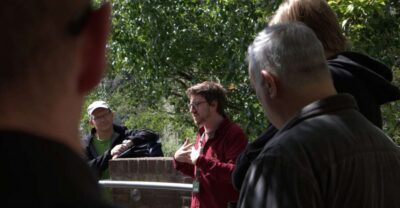
Browse the lists this tour appears in