
Reviewed · HISTORICAL TOURS
The Queenstown Story @ Cobh Heritage Centre , Great Stories of Emigration.
The Queenstown Story in Cobh is interesting because it turns one real port town into a timeline of Irish leaving, suffering, hope, and survival. You start in a restored Victorian railway station and work forward through centuries of routes and reasons, including the Great Famine and how this port connects to Titanic and Lusitania.
I love the skip-the-line ticket idea, because it helps you get your footing fast when you are on a tight schedule. I also like the museum’s interactive way of keeping you engaged, including the chance to follow a named emigrant through the exhibits, plus hands-on touches like Morse code typing. One possible drawback: once you are inside, it’s mostly self-guided, so you will want to be okay with reading, listening, and watching on your own.
Quick hits on what makes this tour worth your time
- Skip-the-line entry so you can get in and start right away at the Cobh Heritage Centre
- A chronological emigration journey starting from the 1600s and moving through later waves
- Interactive follow-a-person storytelling, including moments built around named emigrants
- The Great Famine is part of the main story, not a side note
- Strong maritime connections, with ties to Titanic and Lusitania
- Easy combo with nearby sights, especially if you are using Cobh as a cruise stop hub
Entering the restored Victorian station at Cobh Heritage Centre
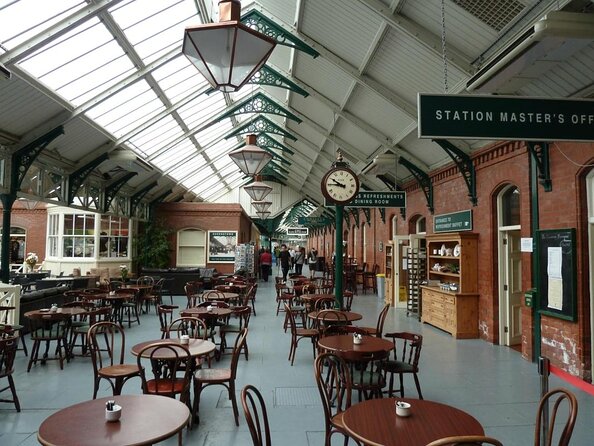
The meeting point is at Deepwater Quay in Cobh, right where the waterfront energy is. The Queenstown Story starts inside the Cobh Heritage Centre, which is housed in a beautifully restored Victorian railway station. Even before you reach the core exhibits, the building gives you that “this place has been here a long time” feeling, with high ceilings and real atmosphere.
This matters because the story is not abstract. It is built around departure. You are walking through the same sort of space where emigrants would have connected to journeys onward, even if your experience is now museum-shaped. That physical sense of place makes the later parts hit harder.
More Historical Tours in Cork
- Cork: Guided Historical Walking Tour
★ 4.7 · 310 reviews - Historic Cork Delicious Donut Adventure by Underground Donut Tour
★ 5.0 · 232 reviews - Visit 16 Sites Key Historical Sites And Experience Cobh Rebel Tours
★ 5.0 · 167 reviews
The 1 to 2 hour self-guided flow, and how to make it feel personal
Your ticket is a skip-the-line admission that gets you into the museum for an independent visit. The practical target is about 1 to 2 hours, and in real visits the sweet spot often lands around 90 to 100 minutes if you actually read and watch instead of speed-scrolling your way through history.
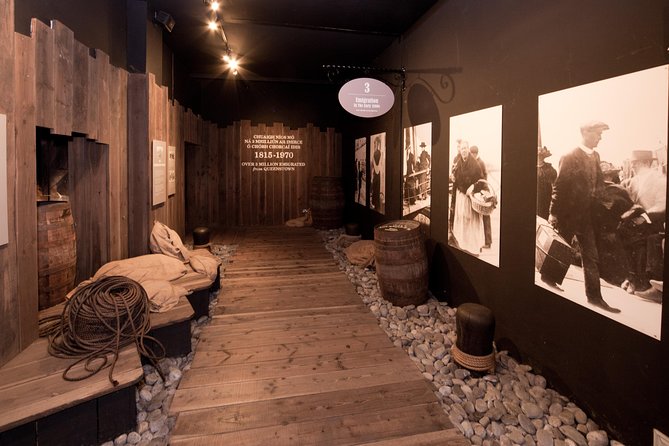
The museum is structured chronologically, so you can follow the story like a map that changes with time. You begin in the 1600s, when Irish emigrants left from Cobh for the Colonies of America and the West Indies. From there, the exhibits move forward through later destinations, and you start to see how the reasons for leaving and the places reached can vary.
What makes it more than a wall-of-text museum is the way it tries to keep you active. One well-liked approach is that you are given the name of an emigrant to track, so you are not just reading facts, you are mentally walking in their footsteps. In one review, Aideen handled the walking-tour storytelling, which suggests the experience can feel guided at points, even while the main structure remains self-paced.
A small reality check
If you prefer a fully guided, talk-every-minute tour, you might find this style a little quiet. It’s also easy to get caught up and lose time, because there is a lot to look at. The good news is that you are not forced to rush through, and you can often take your time at your own pace.
Following emigration routes from the 1600s onward
The core “how it works” idea is simple: the exhibits lay out waves of Irish emigration and the ports and destinations they connect to. As you move through the rooms, the story changes by century, which helps you avoid feeling like you are stuck in one era only.
You also get a sense that emigration is not one uniform event. People left for different reasons, and the museum makes room for that complexity instead of treating every story as the same. That’s part of why it’s such a strong stop for first-time visitors to Cobh, even if you do not know Irish history in detail.
You’ll likely notice that the tone can be emotional. This is not a “happy postcards only” museum. It’s a place that treats departure and loss as part of the historical record, and it does it in a way that feels deliberate rather than random.
More history tours in Cork:
- Cobh: Guided Historic Walking Tour
★ 4.6 · 32 reviews - Cobh: 3-Hour Cultural Tour Plus
★ 4.9 · 31 reviews - Dublin Historical Centre Food Tour with 8 Food Tastings & Drinks
★ 5.0 · 1,718 reviews - 2-Hour Historical Walking Tour from Dublin
★ 5.0 · 875 reviews
The Great Famine thread, and why it changes the whole tone
The Great Famine shows up as a major section in the story, and it is one of the parts that gives the museum its emotional weight. If you know the phrase already but never put it into a real port-town context, you’ll get that link here. This is where the “why people left” becomes more than background knowledge.
From a visitor point of view, this is valuable because it explains the push factors behind migration. It gives you a framework for understanding why so many people ended up on ships connected to this kind of maritime network.
Titanic and Lusitania connections, for ship nerds and casual visitors
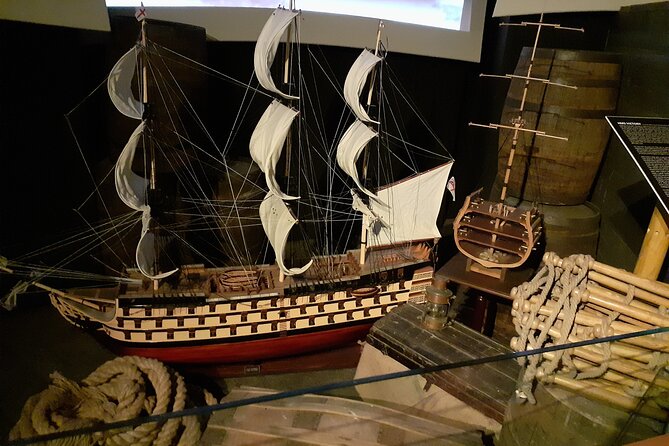
Cobh has a reputation partly because of ships, and the Queenstown Story leans into that. The exhibits include the port town’s connections to both Titanic and Lusitania. Even if you’re not a hardcore history buff, you can still follow the thread because the museum focuses on place and movement, not just ship facts.
This is a smart strategy. Many people come to Cobh with Titanic on their mind, so it helps to expand from that single reference point into a broader understanding of how the port functioned over time. The result is that Titanic and Lusitania are not treated as isolated movie trivia. They become part of a longer story of maritime travel, migration, and risk.
When you should go: timing for cruise days and short stays
The opening hours run from 9:30 AM to 4:00 PM daily, with access within that window. The duration is listed as 1 to 2 hours, so this is an easy fit for people trying to balance multiple stops in Cobh.
If you are arriving by cruise, this can be a great move because the Heritage Centre is close to the waterfront. One review described it as extremely convenient to a ship dock stop, with the museum starting within a short walk. It’s also near the Titanic museum area, so you can stack “ship day” attractions without spending your entire afternoon in transit.
Practical timing tip
If you have limited time, go first to the Queenstown Story, then decide what to add afterward. That way you do the most emotionally loaded and story-heavy stop when your energy is highest.
Price and value for an $18.15 skip-the-line ticket
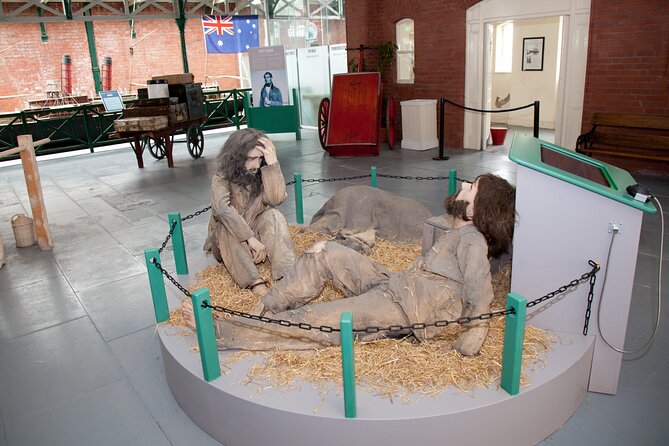
At $18.15 per person, you are paying for three things: museum admission, the skip-the-line advantage, and a structured presentation that connects emigration to Cobh’s real-world setting. That is not a “cheap quick look” price, but it also isn’t a luxury outing.
Here’s why it tends to feel like good value. The exhibits are described as creative and extensive, and many people say it was worth the admission price. On top of that, you can usually spend more time than the minimal hour if you want to read carefully and slow down for interactive bits.
If you are only going to do one museum stop in Cobh, this is one of the better choices because it gives you context for multiple angles of the town, not just ships. You get Ireland’s emigration story, the Great Famine connection, and the maritime links all in one compact visit.
What to expect inside: exhibits, interaction, and the small details that help
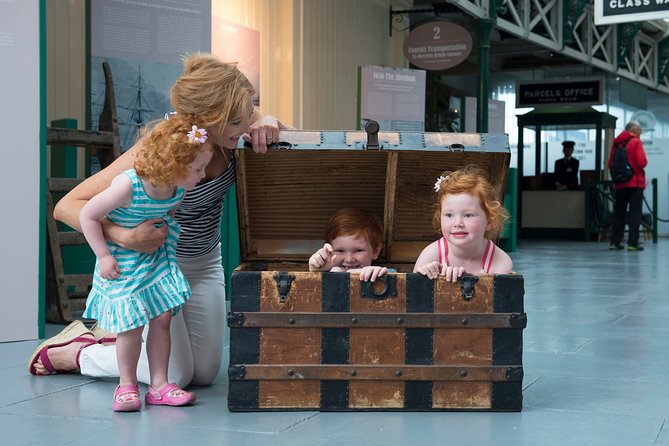
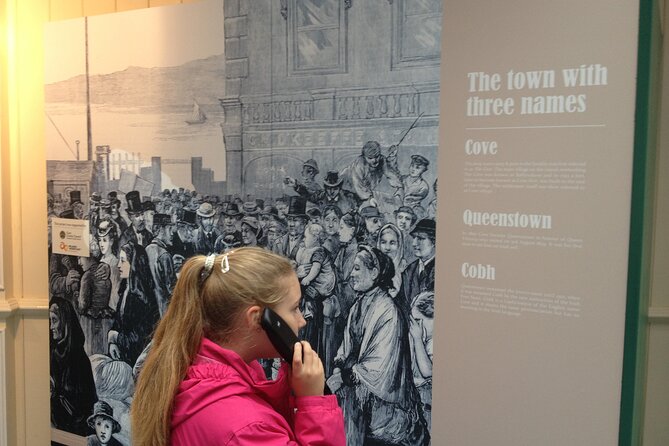
The museum visit is designed to feel like an exploration rather than a straight lecture. You’ll see a mix of reading, listening, and watching elements. Some exhibits focus on visuals and posters, and the experience can include interactive items like typing Morse code.
That matters because it keeps different learning styles engaged. If you like to read, you can focus on text and displays. If you prefer audio or visual storytelling, you can spend more time on those parts. The museum’s layout also supports going at your own pace, which is a big deal for families and mixed-age groups.
Genealogy corner and ancestry.com access
One of the most talked-about features is the genealogy help inside. There is a genealogy consultant on site, and access to ancestry.com is mentioned. This is where the museum can become personal fast, especially if you have family roots in Ireland.
The catch is practical. If the consultant is not at their desk when you visit, it can feel like you missed your chance. It’s not a dealbreaker, because you still get the main exhibits, but it’s worth managing expectations if you are hoping to do live research on the spot.
Cafe, gift shop, and the smart way to plan your break
Food is not included with your ticket, but there is a cafe right before you enter the museum area. Reviews mention scones with cream and jam, plus coffee, and also that the cafe can be a nice pause without having to leave the heritage site.
A good way to use this: arrive a little early, grab a hot drink, and then start the exhibits rested. It also helps if you are visiting after a train from Cork or after walking around Cobh. Then you can do the museum with a full tank and slow down where you want.
The gift shop is also a common highlight. If you like postcards, books, or Irish-themed keepsakes, this is where you’ll probably end up spending a few minutes and a few euros.
Group size, language, and who this fits best
This experience is capped at a maximum of 40 travelers, which usually helps keep the space from feeling totally chaotic. It’s offered in English, and most travelers can participate. Service animals are allowed, too, which is a helpful note for people traveling with a working animal.
This is a strong fit if you:
- Want a history stop that feels tied to a real place you can walk around afterward
- Like museum visits that mix reading with hands-on and interactive elements
- Are curious about Irish emigration beyond Titanic headlines
- Have Irish ancestry and want to feel the story on a personal level
It’s also a good choice for cruise passengers who need something meaningful but not long and exhausting. One of the simplest reasons is that it is doable within a short time window and sits right where Cobh’s attractions cluster.
Should you book the Queenstown Story at Cobh Heritage Centre?
Book it if you want the best kind of “one-stop context” in Cobh. For the price of an average museum ticket, you get a self-guided journey that connects emigration, the Great Famine, and the port’s maritime links into something you can actually follow. Skip-the-line entry is a bonus if you are short on time.
Skip it or rethink it if you need a fully guided, constantly explained tour, or if you will likely not spend time reading and watching exhibits. This experience rewards steady attention.
If you’re choosing between doing nothing in Cobh or doing one solid museum stop, this is the type of place that makes you leave with new connections in your head and a better sense of what this town has carried across centuries.
Newest Cork reviews
- Cork Midleton Distillery Jameson Whiskey Experiences★ 5.0 · 127 reviews
- Hysterical Histories Cork Dinner Theatre Show★ 5.0 · 187 reviews
- Cork: 2-Hour Guided Cork Harbour Scenic Cruise★ 4.5 · 216 reviews
- Titanic Trail Guided Walking Tour Cobh★ 5.0 · 253 reviews
- Cork: Guided Historical Walking Tour★ 4.7 · 310 reviews
- Cliffs of Moher Day Tour from Cork: Including Wild Atlantic Way★ 4.0 · 350 reviews
- Cork: Jameson Irish Whiskey & Midleton Distillery Experience★ 4.8 · 442 reviews
- Ring of Kerry Day Tour from Cork: Including Killarney National Park★ 4.5 · 663 reviews
Historical Tours, compared.

Dublin Historical Centre Food Tour with 8 Food Tastings & Drinks
Read our review →

Historical 2-Hour Guided Walking Tour of Dublin
Read our review →
Dublin to Cork, Blarney Castle & Cóbh Heritage Centre by train
Read our review →
Jeanie Johnston Tall Ship Irish Famine History Tour
Read our review →

Deliciously Dublin: The Artisan Donut Walking & History Tour
Read our review →Browse the lists this tour appears in