
Reviewed · HISTORICAL TOURS
Private Ennis Essential History Tour with Dr Jane O’Brien
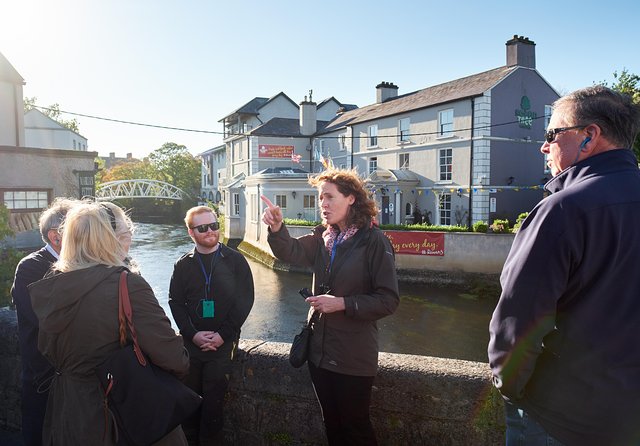
What makes this private Ennis history walk interesting is how Dr Jane O’Brien turns street corners into real-life scenes from the past, with both the drama and the everyday details. I love the way she uses historical sources to explain why the town looked and functioned the way it did, and I love that you get a compact route that racks up steps while covering major eras of Ennis. One possible consideration: because it is only about 1 hour 10 minutes, you will move quickly, and some topics covered along the route, like famine hardship and political violence, are heavy in a short time.
You start in the centre and walk through the town’s older lanes and key landmarks, so you get orientation fast. If you are sensitive to volume or just want easier listening, the option for an amplification device is built in. It is also a private format for up to 6 people, which makes it easier to ask questions and keep the pace comfortable.
If you are a family-name person, this tour can land extra hard. Seeing where the town’s origin stories connect, and hearing how Ennis developed from the 13th century onward, can feel personal in a way no guidebook page ever will.
Key highlights I’d plan around
- Story-first guiding that focuses on what everyday life looked like, not just dates
- 11 targeted stops that trace Ennis from early market-town roots to the 19th-century cathedral
- Optional amplification device, handy in windy streets and busy areas
- A walk that makes Ennis readable, using lanes, monuments, and buildings as clues
- Thoughtful coverage of hard chapters, including famine, punishment, and political conflict
- Good value for a small group, since the price is per group up to 6
Ennis looks different when you know what each street used to do
Ennis is one of those towns where the present is friendly, but the past is actually still “there” if someone points it out. That is what I like about this tour format. You are not stuck in one spot staring at one sign. Instead, you move through the town and the story changes as you turn corners.
The big payoff is speed with context. In a little over an hour, you get a clear sense of how Ennis worked as a medieval market town, what shaped it religiously and politically, and how people lived in the narrower by-ways that linked the main streets to older, poorer areas. It is the kind of tour that helps you return later and actually notice what you are looking at.
More history tours in County Clare:
- Self Guided Electric Bike Tour of Historical Sites in the Burren Co Clare
★ 5.0 · 18 reviews - Private Ennis Dark History Tour with Dr Jane O’Brien (1-6 people)
★ 5.0 · 13 reviews - Dublin Historical Centre Food Tour with 8 Food Tastings & Drinks
★ 5.0 · 1,718 reviews
Where you meet Dr Jane O’Brien, and how the tour feels in real life
You meet at the Ennis Tourist Information Centre on Arthur’s Row, on the O’Connell Street side of town. That is a smart starting point because it puts you in the centre quickly, with the pedestrian streets nearby if you want a brief wander before or after the walk.
This is a private tour for your group only, with up to 6 people. That matters because it changes the tone. You can ask a question without waiting for the whole crowd to catch up. And because you are walking, the guide can pace the stops to what your group wants, like spending an extra minute on a doorway detail or moving on when you have the gist.
The tour is offered in English, and you can request an amplification device for easier listening. That is a small detail, but on a street walk it can be the difference between “fun chat” and “trying to lip read.”
The walking loop: 11 stops in about 70 minutes
Expect a brisk but manageable walk. Each stop is brief, so the experience is built to keep momentum. If you like structured tours but hate when you are stuck listening forever, this suits you.
Also, because the tour ends back near where you started, it is easy to roll straight into lunch or café time. You are not “trapped” across town at the finish.
Clare Museum area: convent origins and the 13th-century market-town start
You begin just by the Clare Museum. This point is more than a landmark. It was the site of an older convent building for the Sisters of Mercy, and that allows the guide to set up a time shift right away.
From there, you get the first big anchor idea: Ennis grew as a medieval market town that originated in the 13th century. Hearing that early timeline at the start helps everything else later make sense. The town is not random. Streets, power, religion, and commerce all connect back to the market role Ennis played.
What to watch for here: if you look at the surrounding streets after the explanation, you start to see how people would have moved, traded, and gathered. It is one of those “okay, now I get it” moments.
Other ways to spend a day in County Clare
- Dublin: Cliffs of Moher, Doolin, Burren, and Galway Day Trip
★ 4.5 · 2,851 reviews - From Doolin: Cliffs of Moher Boat Tour
★ 4.4 · 279 reviews - Public Ennis Walking Tour with Local Expert Dr Jane O’Brien
★ 5.0 · 262 reviews - Galway: Cliffs Cruise, Aran Islands & Connemara Day Tour
★ 4.7 · 111 reviews
Daniel O’Connell Monument: Catholic Emancipation, politics, and public moments
Next you stop by the Daniel O’Connell Monument in the centre of Ennis. This is a short stop, but it is loaded with context. O’Connell’s name is tied to the milestone of Catholic Emancipation, and the guide connects that to the kinds of events that would have felt monumental to residents at the time.
Why this stop matters: it reminds you that Ennis was not just local farming and shopping. It was also part of Ireland’s bigger political story. When you later hear about religious spaces and conflicts, the emotional stakes start to feel real, not academic.
Abbey Street bow-ways: small lanes, big inequality
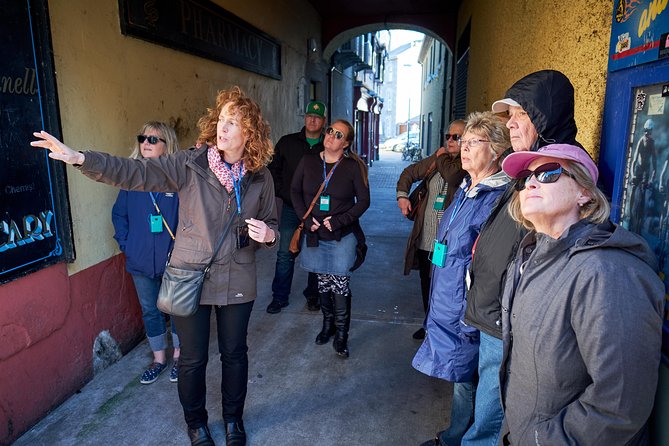
On Abbey Street, you move into one of Ennis’s atmospheric bow-ways, the small laneways that link main streets to what were once poorer tenement areas.
This is where the tour becomes especially “walkable history.” You are not only hearing about social division. You are seeing the physical shape of it. Narrow lanes like this influenced privacy, crowding, and daily routes for people who did not have the same access to space as wealthier residents.
If you like human-scale history, this stop usually lands well. It also sets up the next moments on overcrowding and hardship without making the tour feel like nonstop tragedy.
Ennis Friary near the river Fergus: Franciscan influence and the memory of 1916
By the Old Ennis Abbey area, you explore the role of the Franciscan Friars in the development of Ennis town. This is not only about religion as a building type. It is about how religious communities shaped education, charity, and the rhythm of town life.
You also get a pretty view of the river Fergus, which gives your brain a reset between heavier topics. That is good tour design, and you will feel it as a breather before the guide brings in the memorials linked to the 1916 uprising against British rule.
Practical note: if the weather is windy or you are near groups passing through, the optional amplification device can help here. That is one of the reasons I like that this tour explicitly offers it.
Francis Street: the O’Brien Kings, plus stained glass and calm space
Francis Street is described as the oldest street in Ennis, and it connects to the former palace area of the O’Brien Kings, founders of the town. Even if you are not a medieval scholar, this kind of link makes the town feel grounded. It answers the question: why here?
The stop also includes a friary built in the 1850s, with beautiful stained glass windows. That stained glass part is a good contrast to the tougher themes earlier in the walk. It gives you something visual to look at while still staying in the same “how Ennis grew” storyline.
If you enjoy quiet details, take a moment to look up at the glass and not just at the street. It makes the stop feel more like a lived-in place and less like a photo opportunity.
Arthur’s Row: the old convent building and child hardship records
At Arthur’s Row, the guide shifts to archived experiences connected with children from an orphanage and industrial school that once stood on this site. This is one of the moments where the tone matters. The subject is sensitive, and it is covered in a way that keeps the focus on what it meant for real children and families.
Why I think this stop is valuable: it refuses to keep history comfortable. You learn that institutions, even ones associated with faith, carried real consequences. And because it is placed in the middle of the walk, it does not feel like a random “sad section.” It fits the tour’s overall goal: everyday life and human realities.
If you are travelling with someone who has low tolerance for heavy topics, you can still enjoy the walk, but you might want to mentally prepare for the emotional weight here.
Parnell Street and McParland House: a rare timber frame story
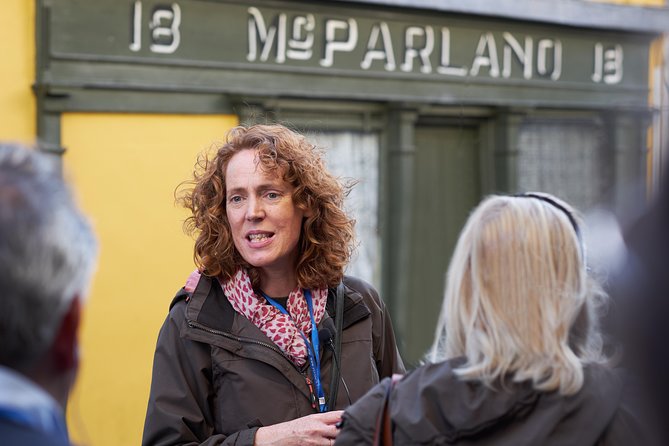
Next is Parnell Street and the McParland House, dating to around 1620. The tour highlights it as the only known surviving timber framed house in Ireland, and also the oldest house of the town to be in continuous use without major alterations to its structure.
That is a big claim, and it is exactly the kind of detail you only get from a guide who pays attention to specifics. You also get small visual cues like the original quaint shopfront and the half-door, which help you imagine the building not as a museum object but as something people actually used.
What to expect from this stop: more “look and notice” than “read and remember.” You will come away wanting to spot timber framing elsewhere in town and thinking about how buildings survive while streets change.
Chapel Lane: penal times, 1735 church roots, and the Great Famine impact
At Chapel Lane, you stop beside the building housing the Chapel Lane market. The site connects to a church built in 1735 during penal times, when restrictions shaped where and how people could practise and gather.
The guide then links that kind of religious setting to the overcrowding seen during the Great Famine, exploring the devastation that hit a town like Ennis. Again, it is heavy material, but the walk format keeps it tied to place, rather than making it feel like a separate lecture.
If you are trying to understand why Irish history feels so emotionally intense, this is one of the stops that explains the “why” behind the visible traces. Not just that tragedy happened, but how it reshaped towns and neighbourhoods.
Market Place: trading, matchmaking, faction fighting, and sculpture meaning
Now you are back in the heart of the old market world at the Market Place. Ennis was a main centre for markets in County Clare, handling the buying and trading of livestock and produce for hundreds of years.
What I like here is that the guide treats markets as social spaces, not only economic hubs. You hear that people met up, that matchmaking happened, and yes, that faction fighting could break out. That blend makes the market story feel like real community life.
You also see a market day sculpture that stands on the site today. The guide explains what it means, so you do not walk past it wondering what it is supposed to represent. It is a classic “small art, big context” moment.
Barrack Street: Gallows Green, 1660 records, and why it shocks
On Barrack Street, you learn that the area was once the town’s old Gallows Green. This stop uses documented crimes and punishments from a corporation manuscript of Ennis dated 1660.
This is the sort of history that can feel almost unbelievable when you read it through modern eyes. The guide’s job here is to translate the records into understandable human stakes, without turning it into cheap shock value.
If you have a strong stomach for darker stories, this is a standout stop because it shows how law and punishment shaped the town’s geography. If you do not, just know it is one of the most intense moments on the route.
Cathedral of Saints Peter and Paul: 1830 to 1870, jail memories, and a haunted towerhouse
The final stretch brings you to the Cathedral of Saints Peter and Paul, the main Catholic church of the region built between 1830 and 1870.
The guide ties it to its surroundings in a clever way. The cathedral stands opposite the Old Ground Hotel, which was once the site of the old town jail. The stop also notes that the cathedral incorporates a haunted towerhouse dating to the 1500s.
A practical touch: the tour usually ends here so you can choose what you want next. If you want to explore the cathedral further, you can. If you prefer, you can head back at your own pace via O’Connell Street, the pedestrianised shopping street.
Price and value: what $270.32 per group really buys
The tour price is listed as $270.32 per group, up to 6 people, and it lasts about 1 hour 10 minutes. That is worth thinking about in per-person terms.
- If you book as a group of 6, you are roughly at about $45 per person.
- If you book for 2, it is more like $135 per person.
So the value depends on how you travel. If you are a couple or solo, you might choose this because you want a private guide and a very efficient walk. If you are with friends or family, the math gets nicer fast.
Also, each stop is marked as admission ticket free, which helps keep the “hidden costs” low. You are paying for guidance and storytelling, not entry fees.
Finally, the tour is commonly booked about 48 days in advance. That hints at steady demand, so if your dates are fixed, it makes sense to lock it in.
Who this private history walk suits best
This is ideal for you if you:
- Want a tight, story-led walk through Ennis without spending half a day planning
- Like history that explains daily life, including hardship and social inequality
- Prefer private guiding where you can ask questions and set your own pace
- Enjoy visual details you can look for on the street, like lanes, buildings, and monuments
It may feel less ideal if you:
- Need a very slow walk with long stops, since the pacing is built for 11 locations in about 70 minutes
- Want a purely cheerful tour, because the guide covers difficult topics related to famine, punishment, and political conflict
For families, it can still work because the guide is covering places rather than using formal lecture style, but the heavier subjects at a few stops mean it is best for families that can handle serious history.
Should you book this tour?
If you want to get Ennis “right” in your head quickly, this is a smart booking. The combination of private group size, a guided route that keeps moving, and Dr Jane O’Brien’s ability to connect monuments and lanes to real life makes it a strong choice for first-timers.
I would book it if you like walking, asking questions, and learning place-based context that helps you explore on your own afterward. If you dislike intense historical topics, you can still enjoy the architecture and political context, but you will want to mentally prep for the heavier chapters in the middle of the walk.
FAQ
How long is the Private Ennis Essential History Tour?
The tour lasts about 1 hour 10 minutes.
What is the maximum group size for this tour?
This is priced for up to 6 people per group.
Is the tour offered in English, and is listening support available?
The tour is offered in English. There is also an option for the guide to use an amplification device for ease of listening.
Do I need to pay admission fees at the stops?
The listed stops are marked as admission ticket free.
Where do we start, and does the tour end nearby?
You start at the Ennis Tourist Information Centre on Arthur’s Row, O’Connell Street, Clonroad Beg, Ennis, Co. Clare. The activity ends back at the meeting point.
What are the cancellation rules if plans change?
You can cancel for a full refund if you cancel at least 24 hours in advance. If you cancel less than 24 hours before the start time, the amount paid will not be refunded.
Newest County Clare reviews
- From Doolin: Cliffs of Moher Guided Coastal Walk★ 5.0 · 35 reviews
- From Doolin: Day Trip to Inisheer with Bike or Bus Tour★ 4.9 · 35 reviews
- Doolin Cave Tour: Experience Europe’s Largest Stalactite★ 4.8 · 72 reviews
- Galway: Cliffs Cruise, Aran Islands & Connemara Day Tour★ 4.7 · 111 reviews
- Public Ennis Walking Tour with Local Expert Dr Jane O’Brien★ 5.0 · 262 reviews
- Dublin: Cliffs of Moher, Doolin, Burren, and Galway Day Trip★ 4.5 · 2,851 reviews
- Shannon Airport to Galway Transfer★ 5.0 · 6 reviews
- Shannon Airport to Galway City, Private Chauffeur Service★ 5.0 · 21 reviews
Historical Tours, compared.

Dublin Historical Centre Food Tour with 8 Food Tastings & Drinks
Read our review →
Historical 2-Hour Guided Walking Tour of Dublin
Read our review →
Dublin to Cork, Blarney Castle & Cóbh Heritage Centre by train
Read our review →
Jeanie Johnston Tall Ship Irish Famine History Tour
Read our review →

Deliciously Dublin: The Artisan Donut Walking & History Tour
Read our review →Browse the lists this tour appears in