
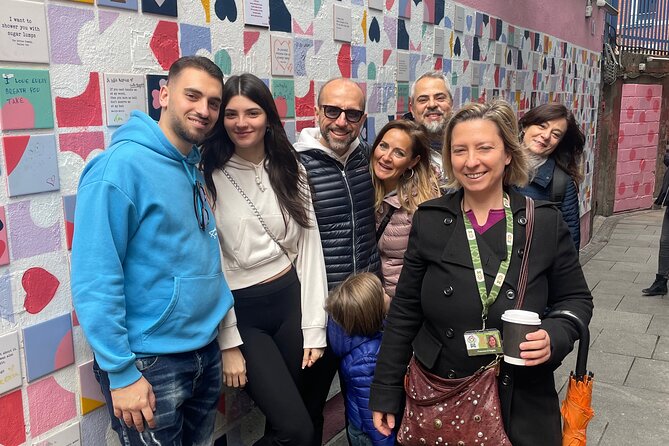
Reviewed · WALKING TOURS
Private Walking Tour in Dublin
What makes this Dublin experience interesting is how it threads together major landmarks and the stories behind them, all on foot, starting at Trinity College and ending at the Molly Malone statue. In a short time, you get a real sense of where power, rebellion, and everyday city life overlap.
I love the way the guide makes the sites make sense, connecting events like the 1916 Easter Rising to the buildings you are looking at. I also love the practical setup, since some stops are admission-free while others are ticketed, so you can decide how much you want to pay to go inside. The only drawback to flag up front: with just 2 to 3 hours, you will see a lot from outside, so if your goal is to enter every building, you may need to pick a few priorities.
Key highlights worth your attention
- Private group, private pace, with time for questions and adjustments based on what you care about.
- Guides like Francesca D’Angelo, John, Sinead, and Yvonne are repeatedly praised for answering questions and tailoring the walk.
- A smart mix of free stops and optional paid interiors, so you can build the day you want.
- A timeline you can walk, from Elizabeth I to Vikings to medieval Dublin to modern monuments.
- Family-flexible energy, including accommodation for kids around ages 6 and 8.
Entering Trinity College Green, the quick way to orient Dublin
This tour starts at Trinity College Dublin on College Green, then runs a clear, walkable line through the historic core. It is an efficient choice if you are visiting for the first time and want your bearings fast, without feeling like you are speed-running Dublin.
Trinity College is your first big anchor. Founded in 1592 from Queen Elizabeth I, it is not just a school you pass, it is a working city within the city. Expect the guide to frame the campus as part of Dublin’s identity, which helps every later stop land with more meaning.
The practical thing to know here: you get about 20 minutes, and the admission ticket is not included for Trinity. You can still appreciate the setting from the outside, but if you want specific interior highlights, plan on spending extra time and possibly paying separate entry.
More Walking Tours in Dublin
- Dublin Highlights and Hidden Gems Guided Walking Tour
★ 5.0 · 6,020 reviews - Dublin: Highlights and Hidden Gems Walking Tour
★ 4.9 · 2,140 reviews - 1916 Rebellion Walking Tour
★ 5.0 · 1,605 reviews
Trinity College to GPO Museum: from Elizabethan learning to 1916 resistance
From Trinity, you move into the heart of Dublin’s dramatic modern story at the GPO Museum. This Georgian building is tightly linked to the idea of freedom from the British Empire, and that theme is not abstract here.
In the 1916 Easter Rising, members of the Irish Volunteers and the Irish Citizen Army seized the building on Easter Monday. Even now, you can see bullet marks in the front pillars, which turns a museum stop into a vivid reminder that these walls remember what happened.
This part usually takes around 15 minutes, and again, admission is not included. If you like artifacts, inside exhibits will be the value-add. If your time is tight, you can still get a lot out of the exterior context and the guide’s explanation, then decide whether the interior is worth the extra cost.
The Spire and Ha’penny Bridge: two landmarks that teach you how Dublin frames the river
Next comes the Spire, officially called the Monument of Light. It is a tall modern monument, 120 metres high, with a base diameter of 3 metres, designed for the new millennium celebration. The stop is short, about 5 minutes, and the admission is free, so it works well as a palate cleanser between deeper history stops.
Why I like this stop on a walking tour: it gives you a modern Dublin reference point. Once you have that landmark in your mind, the rest of the route feels less random. It is easier to picture where you are, especially if you plan to keep exploring after the tour.
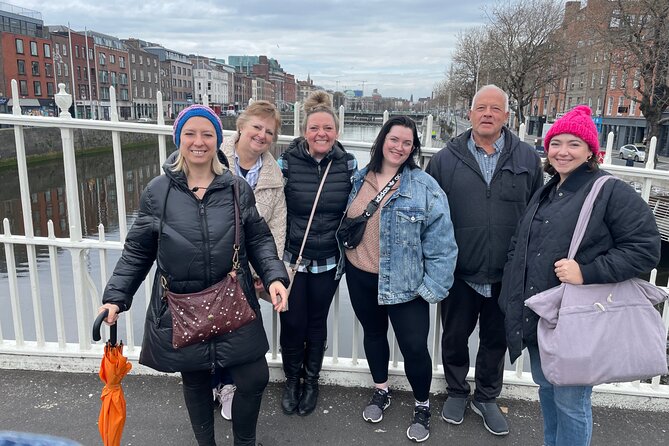
Then you hit Ha’penny Bridge, officially the Liffey Bridge, but famous by its nickname. It was built in 1816 as the first pedestrian bridge in Dublin. The name Ha’penny comes from an old design period when the bridge was tall enough that the crossing cost a half penny.
This is another free stop, also about 5 minutes, and it is one of those moments where walking it helps more than just looking at it. You get a real sense of the river’s role in connecting neighborhoods.
Temple Bar and Wood Quay: where culture, music, and Vikings sit one street apart
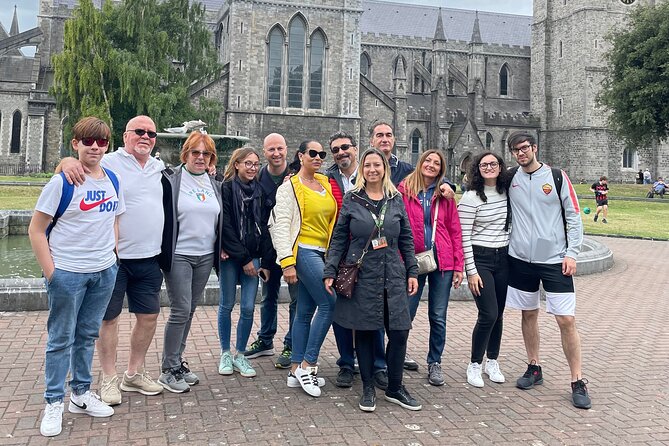
After the bridge, you enter Temple Bar area. This is Dublin’s most famous cultural and nightlife district, and the tour frames it as an old neighborhood with secrets. You will also get a practical sense of why it stays busy, including the idea that traditional Irish music is played every night in the famous pubs.
This stop is about 15 minutes and is free. A small word of advice: if you are not a nightlife person, you can still treat Temple Bar as a cultural snapshot. Focus on the streets and the vibe the guide describes, not on turning it into a bar crawl.
From there, you move to Wood Quay Amphitheatre, positioned at the feet of the hill culminating with Christchurch. This is one of the more surprising stops because it connects you to Dublin’s earliest layers through archaeology.
Archaeologists found what is described as the biggest Viking settlement outside Scandinavia. The Vikings are often described as marauders, and they were also traders. The big detail here is that they permanently settled in Dublin in 841 AD, which is a strong anchor date for understanding why Viking influence pops up in later parts of the city story.
This stop is also about 15 minutes and is admission-free. It is short, but it gives you a “wait, Dublin is this old” moment, which makes the medieval stops much more satisfying.
If this is not quite it, Dublin also does these:
- Dublin to Cliffs of Moher, including Wild Atlantic Way and Galway
★ 5.0 · 23,331 reviews - From Dublin: Cliffs of Moher, Burren & Galway City Day Tour
★ 4.8 · 18,888 reviews - Dublin: Guinness Storehouse Entry Ticket
★ 4.6 · 16,863 reviews - Dublin to Cliffs of Moher, Burren, Wild Atlantic Way, Galway Tour
★ 5.0 · 12,924 reviews
Christ Church Cathedral and St Patrick’s Cathedral: two eras, two atmospheres
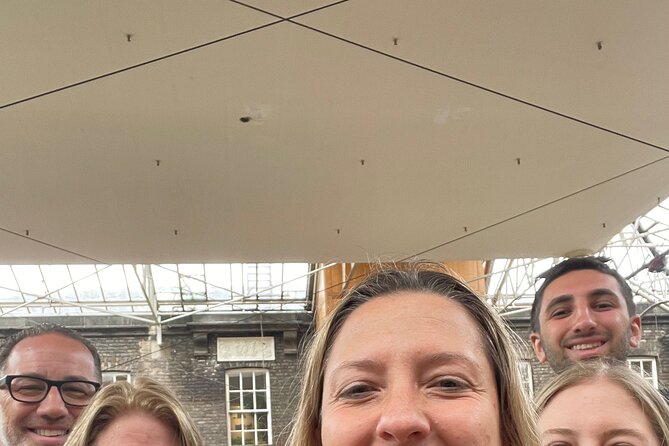
Now the walk turns medieval, and you get a pair of cathedrals that help you compare different strands of Dublin’s past.
Christ Church Cathedral sits in the medieval district. It was originally a Viking church and has welcomed pilgrims and visitors for almost 1,000 years. The guide can help you look past the obvious architecture and notice the treasures, including Strongbow’s tomb and a copy of the Magna Carta.
This stop is about 15 minutes, and admission is not included. If you have a limited budget or limited patience for interior visits, focus on what you can see from where you are standing and listen carefully to the guide’s pointing. If you do go inside, this is the kind of place where the details are part of the payoff.
Then you head to Saint Patrick’s Cathedral in the Liberties. The building was completed between 1225 and 1270 in honor of Ireland’s patron saint, St. Patrick. This site is associated with St. Patrick baptizing Irish Gaelic people and converting them to Christianity, so the story has a foundational feel.
You will also hear about Jonathan Swift’s tomb here, along with other treasures. Admission is not included, and you usually get about 15 minutes. In short time, the guide’s job is to help you understand what matters most in the room you are in, and how this cathedral fits into the larger Dublin pattern.
Dublin Castle and George’s Street Arcade: power, paperwork, and Victorian shopping
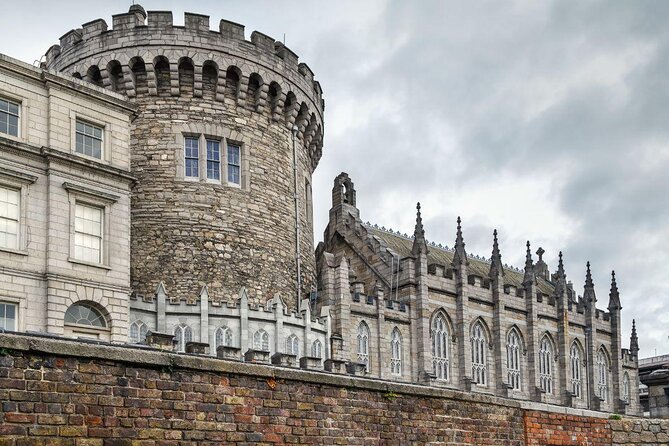
Dublin Castle is next, and it is the kind of stop that makes the city’s political history click. The castle was the seat of the viceroy, the representative of the English monarch, and it was from here that English rule over Ireland lasted for more than 700 years.
If you want a concrete architectural detail to hold onto, remember the Record tower. It is the only remaining piece of the original medieval castle, while much of the rest of what you see is from later State Apartments built in the 18th century.
This segment takes about 20 minutes, and admission is not included. If you are not sure whether you want to pay extra, ask the guide what you can get most from without going in. The outdoor-and-stories approach can still be worth it, especially if your main goal is a walking overview.
Then the walk finishes with George’s Street Arcade. This is Dublin’s oldest shopping centre, and it is housed in Victorian-era architecture. The arcade has been open for almost 140 years as part of the South city market buildings, and the idea here is simple: Dublin history is not only churches and governments, it is also everyday commerce.
This stop is short, about 5 minutes, and admission is free. Treat it as a quick breather with a visual reminder that the city keeps changing while still keeping its older bones.
A perfect landing at Molly Malone, the statue that sells a song
The walk ends at the Molly Malone statue at Suffolk St, in front of the statue. The character was unveiled in 1988 to celebrate Dublin city’s first millennium, and she is the inspiration behind the famous song Molly Malone, often treated as an unofficial anthem.
One reason this ending works is that it feels light after heavier sites. It is also a reminder that culture in Dublin is not separate from politics and religion. The story even has an uncertainty factor, since there is no clear evidence she existed, though one theory suggests the song may have been based on a real woman who died in Dublin in 1699.
This last stop is about 5 minutes and free, so it is a nice moment to wrap your thoughts and decide what you want to do next on your own.
Price and value: is $90.11 per person worth it?
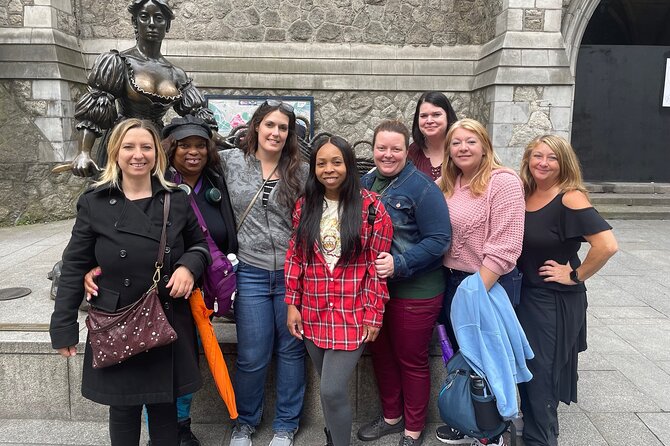
At $90.11 per person for a private walking tour lasting about 2 to 3 hours, you are paying for three things: private guide attention, a tight route, and the guidance that makes connections between sites.
Here is the value math that matters in real life. Several of the biggest-name places on this route are listed as admission ticket not included, meaning you may pay extra if you go inside. On the other hand, you have multiple free stops, including the Spire, Ha’penny Bridge, Temple Bar area, Wood Quay Amphitheatre, George’s Street Arcade, and the Molly Malone statue. That free portion can keep your day from turning expensive.
I also think the private format matters for people who want clarity, not just dates. The guide’s job is to turn a list of landmarks into a usable story you can repeat while you wander later.
One more practical detail: this experience is offered in English and uses a mobile ticket. If you like showing up without paperwork stress, that is a plus.
Who should book this private Dublin walk
This tour fits best if you want a first-pass orientation with enough context to help you explore after. It is especially good for you if you like history you can point to, not history trapped in a textbook.
It also makes sense for families. In examples connected to this tour, guides accommodated children around ages 6 and 8 while still keeping the experience meaningful for adults.
Because it is private, it is also a solid choice if your group wants a paced walk with questions. If you tend to get distracted by details, a good guide can slow down at the right moments and speed up when you want to move.
A few planning tips so your 2 to 3 hours feel smooth
You will walk between areas that are close enough to stay manageable, but you will still want comfortable shoes. The route stacks major Dublin highlights in a short time, so you will be glad you can keep moving without thinking about blisters.
Also, this experience is listed as requiring good weather. If rain or wind is in the forecast, plan to bring a light rain layer and accept that indoor stops might matter more than usual if you choose to pay for entrances.
Finally, decide early how you want to handle paid interiors. With ticketed sites like Trinity, GPO Museum, Christ Church Cathedral, Saint Patrick’s Cathedral, and Dublin Castle, you can make a strategy: pick one or two interiors you really care about, and let the guide help you prioritize.
Should you book this Dublin private walking tour?
I recommend booking this if you want a structured walk that still feels personal. You get a clear route, a helpful guide, and a mix of free sights plus optional paid interiors, so you can shape the day to your budget and stamina.
You might skip it or modify expectations if your dream is a full museum-and-cathedral marathon. In only 2 to 3 hours, this is designed for seeing and understanding, not for ticking every single interior box.
If you want a strong start to Dublin, this is one of the better ways to do it: you finish with the city story in your head, and you end at a landmark that reminds you Dublin is as much about culture as it is about monuments.
FAQ
How long is the Private Walking Tour in Dublin?
The tour lasts about 2 to 3 hours.
Where does the tour start and where does it end?
It starts at Trinity College Dublin, College Green, Dublin 2, and ends at the Molly Malone Statue on Suffolk St, Dublin 2.
What is the price per person?
The price is $90.11 per person.
Is this tour private?
Yes. It is a private tour/activity, so only your group participates.
Is admission included for the stops?
Not for every stop. Admission ticket is listed as not included for Trinity College Dublin, GPO Museum, Christ Church Cathedral, Saint Patrick’s Cathedral, and Dublin Castle. Admission is listed as free for the Spire, Ha’penny Bridge, Temple Bar area, Wood Quay Amphitheatre, George’s Street Arcade, and the Molly Malone statue area.
What language is the tour offered in?
The tour is offered in English.
Do I need a printed ticket?
No. The tour provides a mobile ticket.
Is the tour suitable for families and children?
Most people can participate, and there are examples of the guide accommodating children aged 6 and 8.
What if the weather is poor?
This experience requires good weather. If it is canceled due to poor weather, you will be offered a different date or a full refund.
What is the cancellation policy?
Free cancellation is available. You can cancel up to 24 hours in advance for a full refund. If you cancel less than 24 hours before the start time, the amount paid is not refunded.
Newest Dublin reviews
- Dublin: Traditional Pubs Walking Tour with Local Guide★ 4.9 · 112 reviews
- Dublin: Cliffs of Moher, Ennis, & Bunratty Castle Day Tour★ 4.9 · 113 reviews
- Meet and Eat Dublin: Dublin Food Walking Tour★ 5.0 · 115 reviews
- Small Group-Dublin Walking Tours★ 5.0 · 116 reviews
- A Silent Disco Walking Tour★ 5.0 · 118 reviews
- 3-Day Southern Ireland Tour Including Galway and Kerry from Dublin★ 4.5 · 123 reviews
- From Dublin: Wicklow, Glendalough, Waterfall & Sheepdog demo★ 4.5 · 126 reviews
- Dublin: Guinness Storehouse Connoisseur Experience★ 4.8 · 123 reviews
Walking Tours, compared.
Dublin Highlights and Hidden Gems Guided Walking Tour
Read our review →


90 Minute Dublin Walking tour and Sightseeing tips
Read our review →

Historical 2-Hour Guided Walking Tour of Dublin
Read our review →
Dublin Traditional Irish 3 Course Meal Walking Tour with Local
Read our review →
Browse the lists this tour appears in