
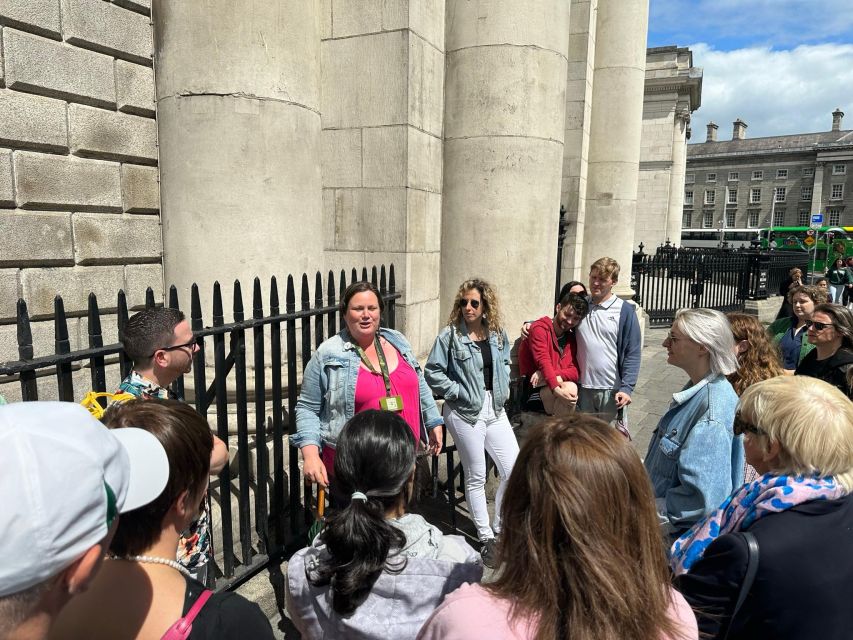
Reviewed · HISTORICAL TOURS
Dublin: LGBT Pride Walking Tour with Queer History
Dublin becomes a lot more interesting when you walk it with a plan, and this Pride-focused route does exactly that. You get street-level stories tied to real places, from revolutionary queer figures to people fighting for legal recognition. It is a simple concept with big emotional payoff, especially when your guide brings in both the past and the ongoing questions.
I especially love how the tour connects names, like Panti Bliss and Dr Lydia Foy, to the specific corners and buildings you can see today. I also like the tone, it stays engaging and funny without turning serious topics into a lecture. One thing to consider is that you will be on your feet most of the time for the full two hours, so comfortable shoes matter.
Key Things You Should Know Before You Go
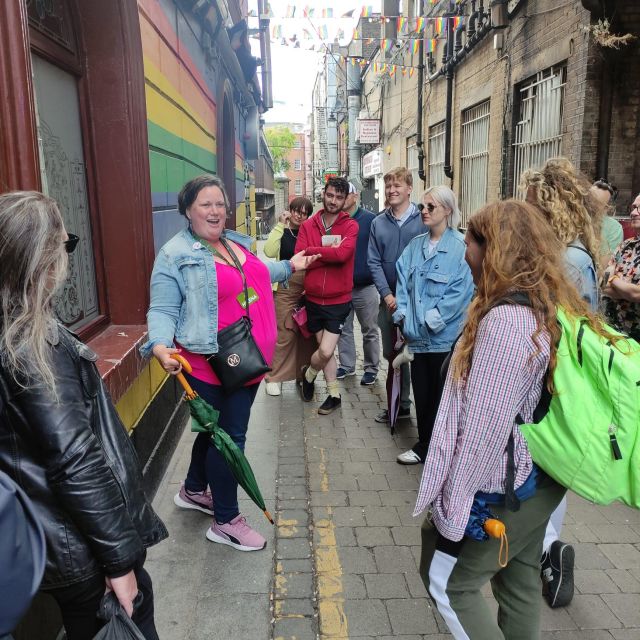
- Green umbrella meeting point right outside the Old Storehouse Bar & Restaurant
- 2 hours on foot focused on Dublin’s LGBTQ+ milestones and people
- Landmark stops include Liberty Hall, Trinity College, the General Post Office, the Hirschfield Centre, the Diceman’s Corner, and the George
- Named figures and key topics like Panti Bliss and Dr Lydia Foy, plus the Gender Recognition Act
- Uplifting plus honest storytelling about exclusion, abuse, and later advances like marriage equality
Turning Dublin Streets Into Queer History in 2 Hours
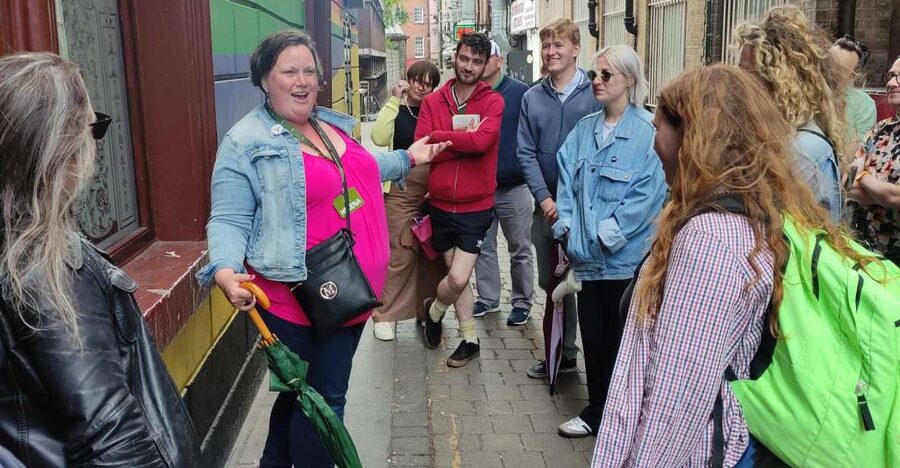
This is not a broad lecture about Pride month. It is a walking tour built around the way Dublin itself remembers, or refuses to remember, certain people and movements. You walk through the city while your guide threads together activism, culture, and hard-won legal change.
The time frame helps. Two hours is long enough to make the connections between places and events feel real, but short enough to fit into a busy Dublin day. If you are the type who likes a guided “first pass” before you explore on your own, this format works well.
More Historical Tours in Dublin
- Dublin Historical Centre Food Tour with 8 Food Tastings & Drinks
★ 5.0 · 1,718 reviews - 2-Hour Historical Walking Tour from Dublin
★ 5.0 · 875 reviews - Historical 2-Hour Guided Walking Tour of Dublin
★ 4.7 · 865 reviews
Where You Start: Old Storehouse Bar, Green Umbrella, Then Off You Go
Your meeting point is very specific, which I like. Meet your guide directly outside the Old Storehouse Bar & Restaurant, and look for someone carrying a green umbrella. The tour ends back at the same meeting point, so you do not have to worry about transfers or getting your bearings at the end.
You should also go in ready to walk comfortably. Bring comfortable shoes, because the route is designed for moving between stops. The tour is live, guided in English, and it keeps you walking through multiple areas rather than sitting for long explanations.
Liberty Hall to the General Post Office: First Pride, Revolutionary Stories, Real Places
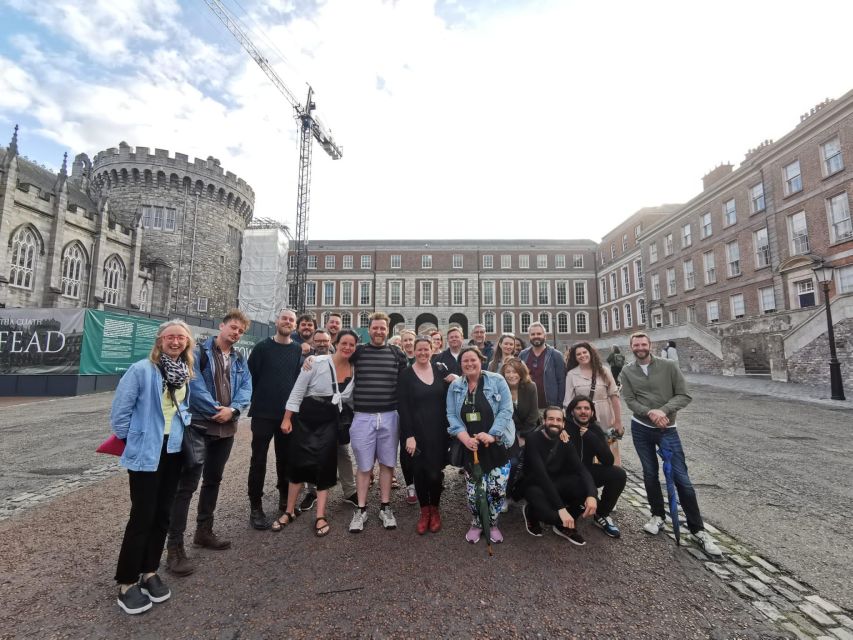
One of the strongest parts of the experience is how it uses prominent Dublin landmarks to tell the story of LGBTQ+ visibility. The tour includes Liberty Hall, where you hear about the first Pride protest. That is a powerful anchor point because it shifts Pride from being just a yearly event into something with roots in organized public action.
From there, you head toward the General Post Office and hear stories that tie LGBTQ+ identity to broader revolutionary energy. The guide highlights revolutionary queer figures like Panti Bliss, and you get context for why her story matters in Ireland’s wider social change. Even if you know the name, hearing it connected to an identifiable stop makes it easier to remember.
I also appreciate that the tour does not treat Pride as a separate universe from Irish history. It frames queer activism as part of the country’s political and cultural evolution, not an add-on.
Trinity College and the Sexual Liberation Movement: How the Ideas Spread
Trinity College comes up as another key thread in the story. As you pass by, you discuss the Sexual Liberation Movement, and you can feel how this tour is built to connect the dots. The guide helps you understand how shifts in public attitudes did not happen out of thin air, they followed people who pushed boundaries and forced conversations into the open.
This is where the walking tour format helps again. You are not just hearing about an era, you are seeing the present-day institution as you learn what it represented during changing times. It is the kind of stop that makes you glance at the buildings differently after the explanation.
A small practical note: because this is a walking tour, you may want to pay attention early on. The first stretch sets up the “why” behind later stories, so even if you are only half-listening while you walk, try to catch the way your guide frames the movement.
More Walking Tours in Dublin
- Dublin Highlights and Hidden Gems Guided Walking Tour
★ 5.0 · 6,020 reviews - Dublin: Highlights and Hidden Gems Walking Tour
★ 4.9 · 2,140 reviews - 1916 Rebellion Walking Tour
★ 5.0 · 1,605 reviews - 90 Minute Dublin Walking tour and Sightseeing tips
★ 5.0 · 916 reviews
Hirschfield Centre, the Diceman’s Corner, and the George: Places You Can Revisit Later
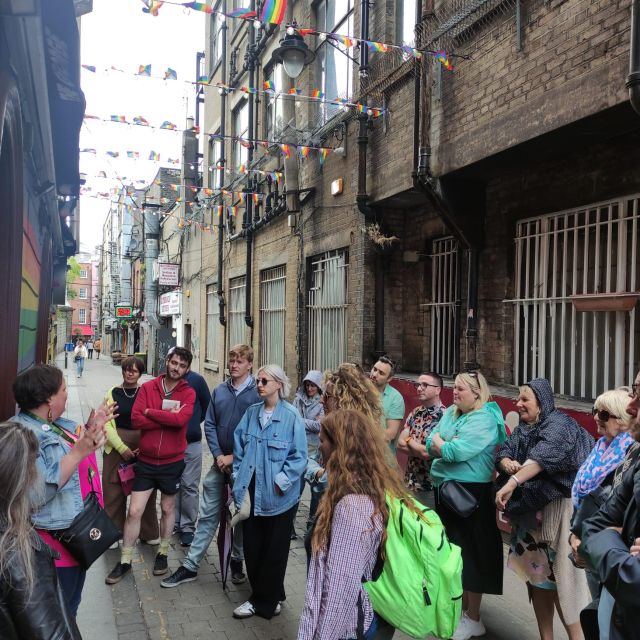
The tour also takes you past places that many visitors associate with Dublin’s queer scene. You will pass by the Hirschfield Centre, the Diceman’s Corner, and the George, described as Ireland’s most iconic LGBTQ venue. Seeing these names in a tour context adds weight, because you are not just looking at a venue, you are learning how the community claimed space.
The Diceman’s Corner stop is especially interesting because the guide treats it as a landmark in the city’s ongoing story. You get a sense of where recognition has grown, and where it had to be fought for. The George helps balance things out by reminding you that queer life is not only about protests and policy. It is also about community, culture, and places where people can be visible.
If you like returning to places after a tour, this one gives you strong candidates. After two hours, you will likely want to go back, slower, and look at the street-level details again.
Dr Lydia Foy, Gender Recognition, and Why This Still Feels Current
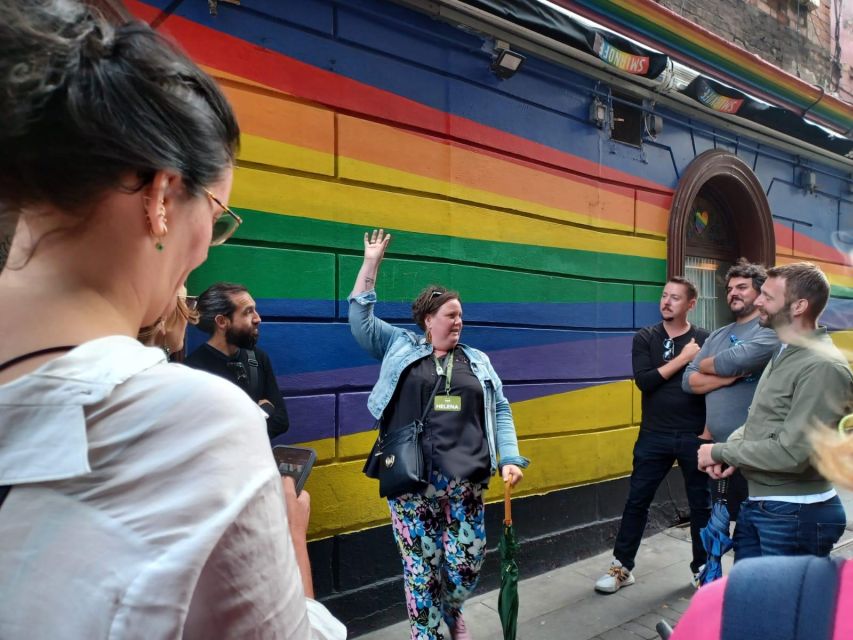
A big part of the tour focuses on how recognition is not only a cultural issue, it is also a legal one. You hear about Dr Lydia Foy and the Gender Recognition Act, and you learn why these stories matter in the real world.
What I like about this section is the way it links personal identity to public policy. You are not just learning names and dates. You are learning the mechanism, how change happened, and what it took to get beyond exclusion and abuse toward later legal advances like marriage equality.
This is also where the guide’s style matters. The best moments are when your guide connects the dots between earlier activism and what still needs attention today. If you care about human rights, you will feel the through-line.
Meeting Helene: Humor, Personal Stories, and Room for Questions
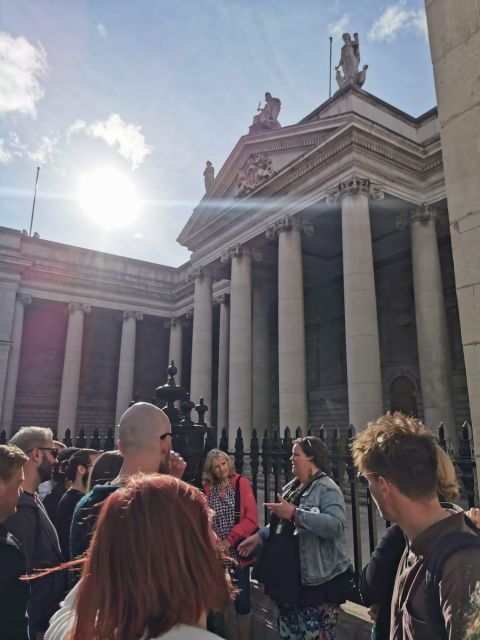
A lot of walking tours rise or fall on the guide, and this one is powered by Helene. The comments about her stand out for a reason. She comes across as genuinely invested in the topic, and she uses a mix of wit and warmth to keep the pace lively.
You can tell she has worked to make the material accessible. Several people praised how the time flew by, and that is usually a sign that the guide knows when to speed up, when to slow down, and when to add a personal touch. Helene also answers questions, which matters because queer history often brings up curiosity, context questions, and respectful debate.
One note I would treat carefully: at least one person wrote that Helene helped them with a lift back to their hotel. That sounds like her going above and beyond, but it is not something you should plan around. Still, it gives you a good read on her kindness and willingness to help if a situation comes up.
Price and Value: Is $27 Worth a Guided Two Hours?
At $27 per person for a two-hour walking tour, the price feels fair for what you get. You are paying for two things that are hard to replicate on your own: a live guide who can connect people, policies, and places, and a structured route that keeps you from getting lost in random reading.
If you already love independent museum time and you can self-guide, you might decide to research a few names and walk the route on your own. But most people do not come to Dublin wanting to produce a timeline by themselves. They want context fast, and they want it while seeing the city.
The value question comes down to your time. Two hours is a manageable chunk of a day, and the stops are varied enough that you leave with both names to remember and streets to recognize when you return to explore.
Who This Tour Fits Best (And Who Might Want Something Else)
This tour is a strong pick if you want a guided “map in your head” for queer history in Dublin. It suits first-time visitors who want to see more than just the postcard sites. It also fits LGBTQ+ travelers, allies, and history lovers who like learning through storytelling tied to real addresses.
It is also a good match if you enjoy humor and humanity in serious topics. Several people highlighted that the tour stays uplifting while still addressing challenges. That balance is not guaranteed on every themed tour, so it is worth noting.
The main mismatch is comfort and mobility. Since it is a walking tour that lasts two hours, it may not feel great if long standing or walking is difficult for you. Wheelchair access is listed, but you still want to be realistic about endurance on cobbles and sidewalks.
Should You Book This Dublin Pride Walking Tour?
I think you should book it if you want queer history that feels connected to the city you are actually walking through. The combination of key figures like Panti Bliss and Dr Lydia Foy, plus specific Dublin landmarks like Liberty Hall, Trinity College, the General Post Office, the Hirschfield Centre, the Diceman’s Corner, and the George, gives you a route that sticks.
Book it especially if you care about learning how activism translated into recognition, from exclusion and abuse to legal and social advances. And if you are lucky enough to have Helene, you are likely to get a tour that feels like a smart friend sharing stories, not a scripted slideshow.
If you only want purely celebratory Pride content, this may feel heavier than you expect. But if you want the full context, the victories and the hard parts, this walking tour is a smart use of two hours in Dublin.
FAQ
How long is the Dublin LGBT Pride Walking Tour?
The tour lasts 2 hours.
How much does the tour cost?
The price is $27 per person.
Where do I meet the guide?
Meet your guide directly outside the Old Storehouse Bar & Restaurant. Look for someone carrying a green umbrella.
What language is the tour guide using?
The live tour guide speaks English.
Is the tour wheelchair accessible?
Yes, the tour is listed as wheelchair accessible.
What should I bring?
Wear comfortable shoes.
Is there free cancellation and flexible payment?
Yes. You can cancel up to 24 hours in advance for a full refund. You can also reserve now and pay later, meaning you can book your spot without paying today.
Newest Dublin reviews
- Dublin: Traditional Pubs Walking Tour with Local Guide★ 4.9 · 112 reviews
- Dublin: Cliffs of Moher, Ennis, & Bunratty Castle Day Tour★ 4.9 · 113 reviews
- Meet and Eat Dublin: Dublin Food Walking Tour★ 5.0 · 115 reviews
- Small Group-Dublin Walking Tours★ 5.0 · 116 reviews
- A Silent Disco Walking Tour★ 5.0 · 118 reviews
- 3-Day Southern Ireland Tour Including Galway and Kerry from Dublin★ 4.5 · 123 reviews
- From Dublin: Wicklow, Glendalough, Waterfall & Sheepdog demo★ 4.5 · 126 reviews
- Dublin: Guinness Storehouse Connoisseur Experience★ 4.8 · 123 reviews
Historical Tours, compared.

Dublin Historical Centre Food Tour with 8 Food Tastings & Drinks
Read our review →

Historical 2-Hour Guided Walking Tour of Dublin
Read our review →
Dublin to Cork, Blarney Castle & Cóbh Heritage Centre by train
Read our review →
Jeanie Johnston Tall Ship Irish Famine History Tour
Read our review →

Deliciously Dublin: The Artisan Donut Walking & History Tour
Read our review →Browse the lists this tour appears in