
Reviewed · WALKING TOURS
Dublin Highlights: 2.45-Hour Walking Tour in Italian
If you want Dublin’s highlights without spending your first day googling directions, this Italian-speaking walking tour is a strong way to get your bearings. The route threads together the city’s big story, from the legend of St. Patrick to Dublin under British rule and the push toward the Anglo-Irish Treaty.
I love that you get main monuments in a tight, walkable loop, so the city starts to make sense fast. I also like that the guide storytelling is aimed at keeping people engaged, including families, with guides like Melania and Michela V. showing real skill at making history feel human. One thing to consider is that it is not set up for wheelchair users, and it is a walking tour, so comfortable shoes matter.
Key Things to Love About This Dublin Walking Tour
- Italian live guiding that connects the dots between places you can actually see
- Trinity College to the Spire route that works well for a first visit
- Focus on big turning points, from St. Patrick to 1921
- Stop-and-explain moments at Dublin Castle, two major cathedrals, and the GPO
- Temple Bar and pub tips included, so you know where to go next
- Discounts along the way, including The Well Restaurant, Wallace Tavern, and the Irish Whiskey Museum
Why This Italian Dublin Route Gets Past the Usual Checklist
Dublin can feel like two cities at once. There’s the postcard Ireland of old stone and riverside bridges. Then there’s the modern Dublin of music, pubs, and quick questions like where to eat tonight. This tour does a nice job of balancing both.
You start by learning the city’s background in plain language, not just dates. Then you move through the exact spots that shape that story. The guide also uses insider practical tips as the tour goes, like where to find Irish stew, where live music tends to happen, and which pubs are worth your time.
The biggest advantage is the pacing. In about three hours, you cover what most people try to squeeze into a whole day, and you leave with a mental map you can reuse.
More Walking Tours in Dublin
- Dublin Highlights and Hidden Gems Guided Walking Tour
★ 5.0 · 6,020 reviews - Dublin: Highlights and Hidden Gems Walking Tour
★ 4.9 · 2,140 reviews - 1916 Rebellion Walking Tour
★ 5.0 · 1,605 reviews
Meeting at Henry Grattan Monument, Right by Trinity College Green
You meet at the Henry Grattan Monument on College Green, in front of Trinity College. This is a smart starting place because it anchors you immediately to the center of Dublin. You’re also standing where the “old Dublin” feeling begins, before the walk pulls you toward medieval and then Georgian layers.
A practical tip here: if you want to take photos at the start, arrive a few minutes early. College Green is the kind of space where light and angles can shift quickly, and you’ll want at least a minute to get your shots before the group starts moving.
From here, the guide sets the tone, linking Ireland’s story to the specific buildings you’ll see later. You’ll also get the local rhythm of how the city talks about itself, which makes the rest of the walk click.
Molly Malone Statue and the Legend That Puts You in Dublin’s Street Level
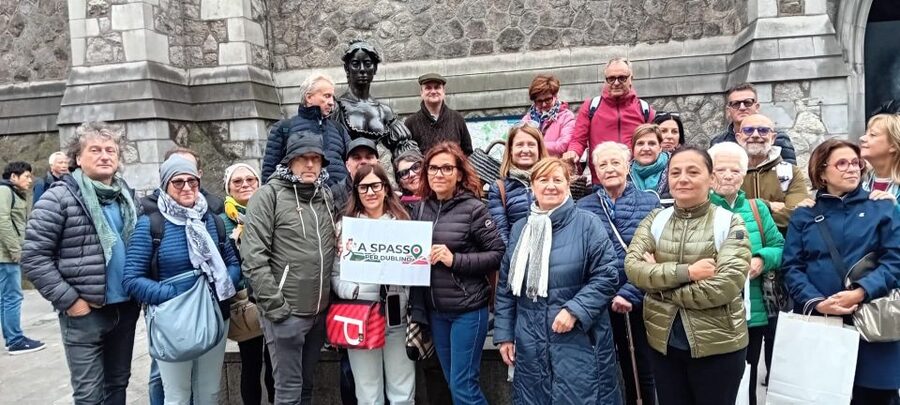
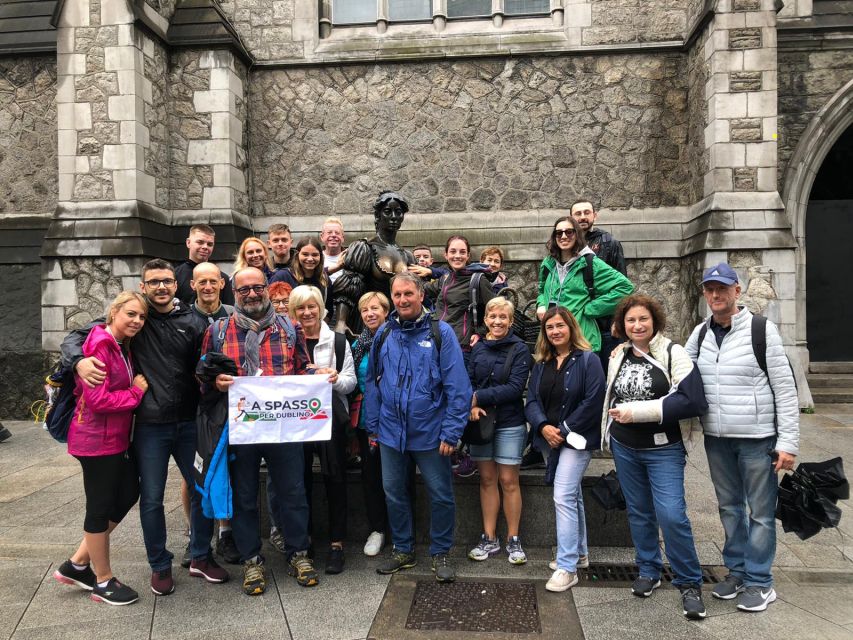
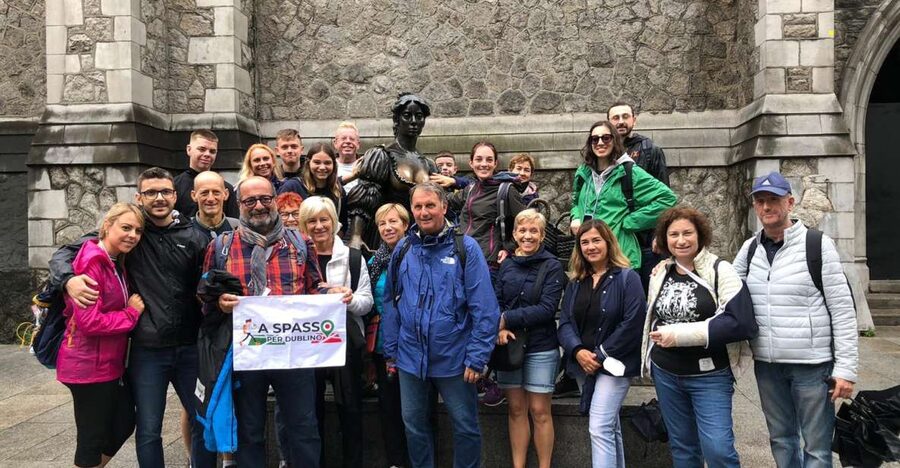
Next up is the Molly Malone Statue. Even if you think you know the tune, this stop works because the guide uses it as a doorway into how Dubliners remember their past. Molly Malone is one of those names that makes the city feel personal, not like a museum.
This is where you start hearing the tour in full narrative mode. The guide doesn’t just point and move. You get story context that helps you understand why later stops matter, especially when the tour shifts from legend and early Ireland into monuments tied to power and politics.
If you’re traveling with kids, this is a great moment. One of the standout guide strengths is keeping younger people interested without turning the tour into a lecture. Guides such as Melania have a knack for making that balance work, including with an 8-year-old in the group.
Dublin Castle: Where Power Shows in Stone and Shapes Modern Ireland
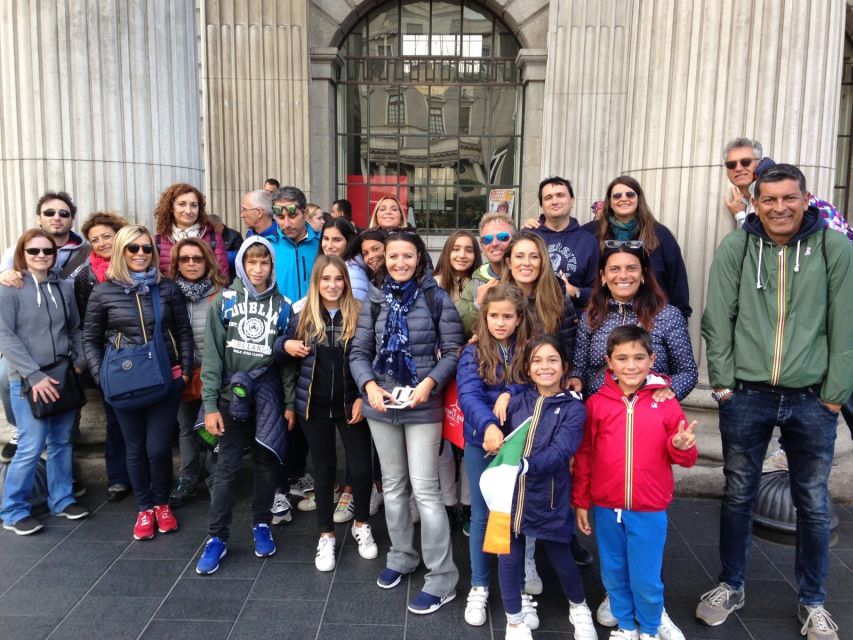
The walk then brings you to Dublin Castle, a place where history is not hiding. The British controlled Ireland for long stretches, and Dublin Castle is tied to that era. The tour connects that period up to the signing of the Anglo-Irish Treaty in 1921, which helps you understand why this location matters beyond architecture.
What makes this stop valuable is the way the guide explains what you’re looking at. You’re not only seeing a big 18th-century presence, you’re learning how political control and public life shaped one another. That makes later “independence story” stops feel less random.
One caution: castle areas can be busy at peak times. You’ll likely move at a steady walking pace and get your viewing time without lingering too long. If you’re the type who loves slow photography, plan to return later on your own.
If this is not quite it, Dublin also does these:
- Dublin to Cliffs of Moher, including Wild Atlantic Way and Galway
★ 5.0 · 23,331 reviews - From Dublin: Cliffs of Moher, Burren & Galway City Day Tour
★ 4.8 · 18,888 reviews - Dublin: Guinness Storehouse Entry Ticket
★ 4.6 · 16,863 reviews - Dublin to Cliffs of Moher, Burren, Wild Atlantic Way, Galway Tour
★ 5.0 · 12,924 reviews
Two Cathedrals With Big Facades: St Patrick’s and Christ Church
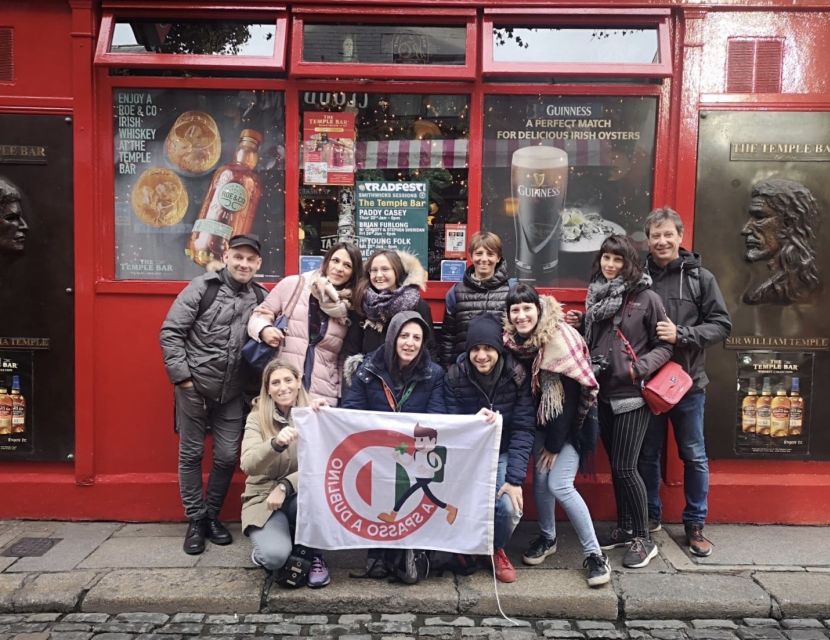
Next, you’ll marvel at the facades of St Patrick’s Cathedral and Christ Church Cathedral. These are not subtle buildings. Even before you know the details, they impress, and the guide uses that visual impact to set up the religious and cultural context for the city.
St Patrick’s Cathedral is tied to the tour’s origin point in Ireland’s early Christian story, including the legend of St. Patrick arriving to evangelize. Christ Church Cathedral adds another layer, helping you see how Dublin’s identity formed around major religious institutions.
A tip for your enjoyment: look up. Cathedral exteriors reward attention to details, and the guide’s explanations work best when you can match the words to what you see in front of you.
Temple Bar: Entertainment District, Plus Real Next-Step Advice
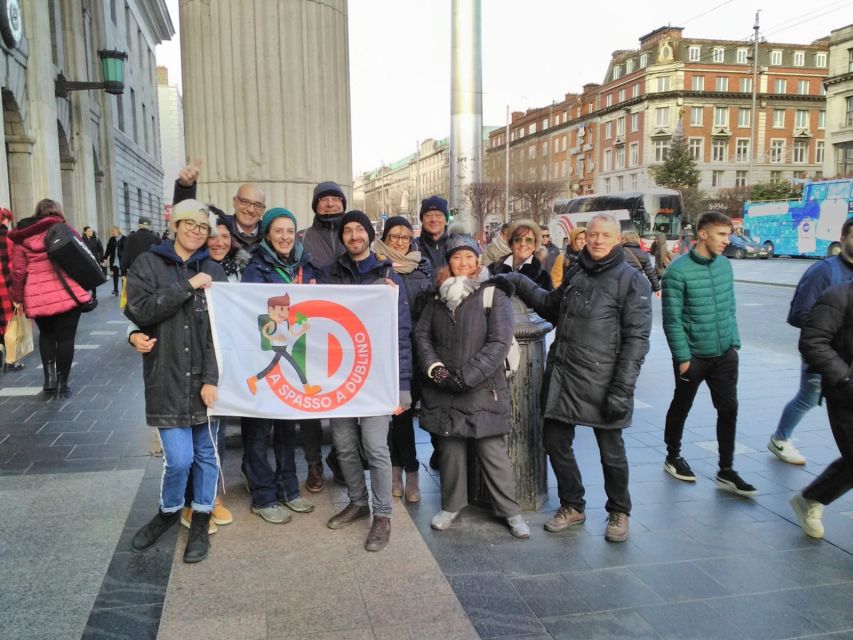
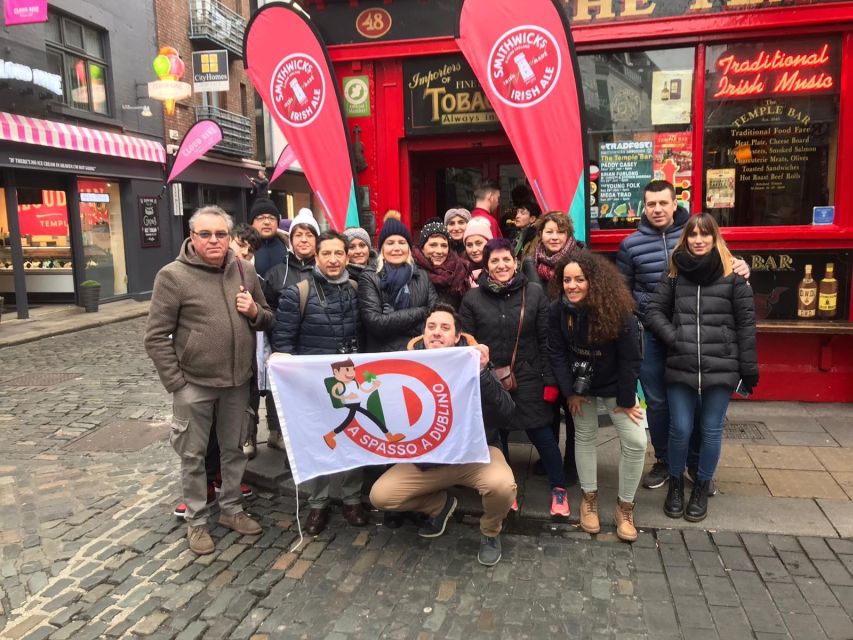
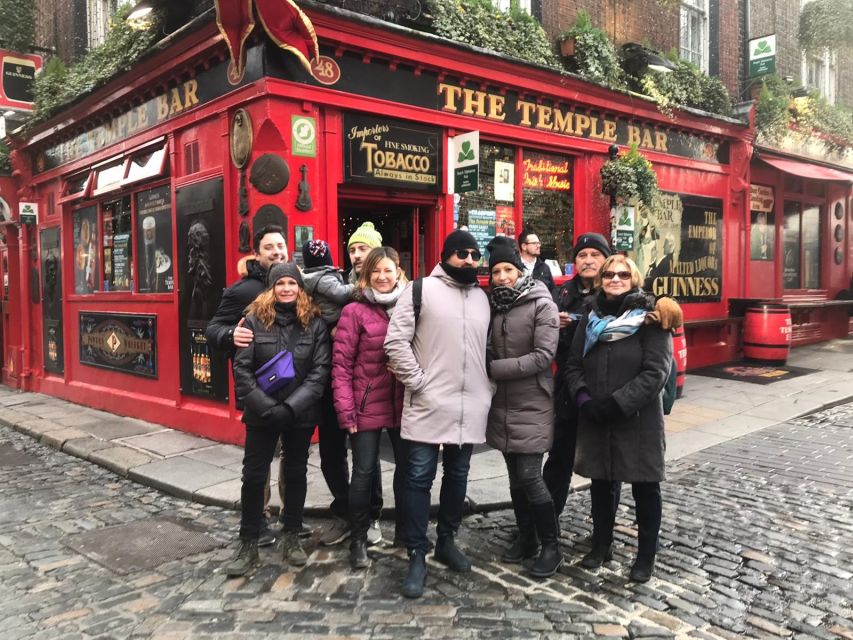
After the cathedrals, you hit Temple Bar, the well-known entertainment district. This is where Dublin feels most like a living city, with energy in the streets and a “go enjoy yourself” vibe.
The tour keeps Temple Bar grounded. Instead of just describing it, you get practical advice for how to experience it without wasting time, like where to listen for live music and which pubs are worth stepping into. The guide also shares tips for eating, including where to find a tasty Irish stew nearby.
Important to know: Temple Bar can be lively and crowded depending on the day and hour. If you want a calmer look, your best move is to use the tour stop as orientation, then return at your own pace later in the evening when you’re ready to shop for the right atmosphere.
Crossing Ha’penny Bridge (The Liffey Bridge) to See North Side Dublin
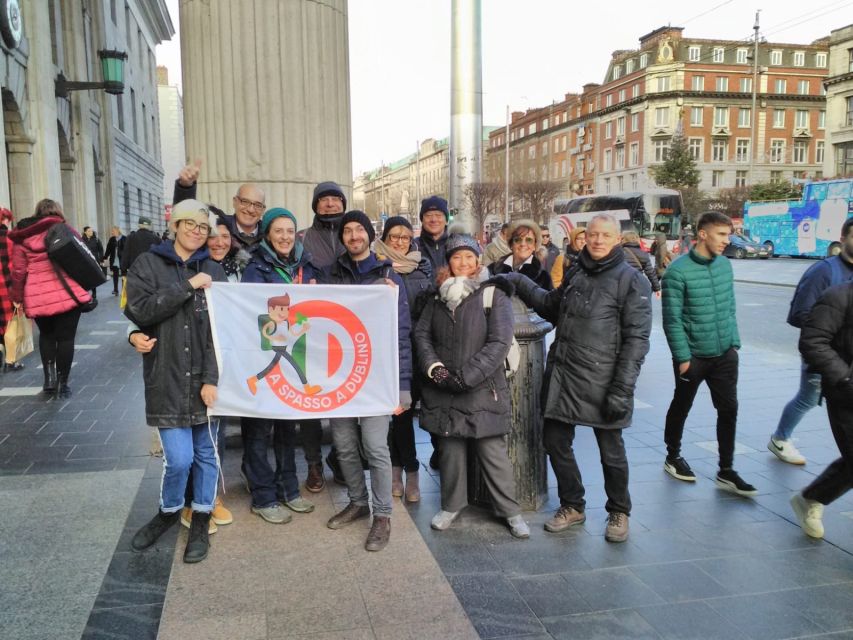
Then comes one of the most iconic moments: crossing the Liffey Bridge, known locally as the Ha’penny Bridge. The guide uses this crossing as a story hinge, switching you from the south side feel to the north side’s major history sites.
On the north side, the tour focuses on significant places tied to Ireland’s public life. You’ll also hear about the General Post Office, and how it fits into the independence-era narrative. There’s a strong emphasis on the city’s architectural layers too, including the mention that you’ll see one of the last Georgian buildings built in the capital.
This is the part of the walk where your mental map starts becoming useful. You stop seeing the river as a line on a map and start understanding it as the divider that shaped neighborhoods, movement, and events.
The GPO Museum and the Independence Story in One Practical Stop
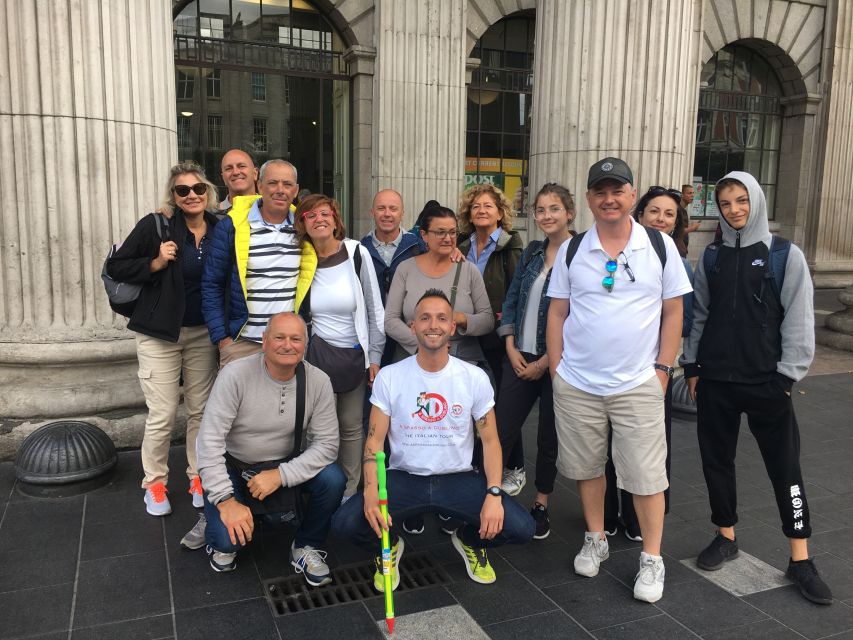
The tour then lands at the GPO (General Post Office) Museum. This is one of Dublin’s most important civic landmarks, and it’s where the tour’s political arc becomes personal. The guide ties this stop to the broader story you’ve been hearing, including British control and the lead-up to the Anglo-Irish Treaty in 1921.
Even if you do not plan to spend lots of time inside museum spaces (entrance fees are not included), you’ll get enough context outside to make the building meaningful. If you do choose to go in later, you’ll arrive with questions already formed, which makes the visit more than just looking at exhibits.
This stop is also good for photo opportunities. The architecture is bold, and the guide’s explanations help you frame what you’re photographing.
Ending at O’Connell Street’s Spire, Then Choosing Your Own Next Move
The tour finishes near the Spire of Dublin on O’Connell Street. Ending here is useful because it puts you in a central position to keep exploring. You can angle toward shopping streets, head toward additional historic areas, or pivot to evening plans around pubs and music.
One detail to keep in mind: the activity description also states it ends back at the meeting point. In practice, the important thing is that you will wrap up your walk around the Spire area, so have your feet ready for a short final stretch and then decide where to go next.
Price and Value: Where the € Feel Comes From at $28
At $28 per person for an Italian-speaking, about three-hour walking tour, this is the kind of price that usually makes sense for first-timers. You are paying for three things at once: a guided route through key sights, interpretation that makes those sights stick, and practical insider recommendations for food and nightlife.
The discounts included add to the value. The tour lists a 15% discount at The Well Restaurant, Wallace Tavern, and the Irish Whiskey Museum, plus a 10% discount at Sfuso, and a special bundle at Caffè Cagliostro. Those are the sorts of extras that can turn the cost into something you feel immediately, especially if you plan one meal and one drink stop soon after.
Entrance fees are not included, so if you want to go inside museums or paid sights, budget separately. The good news is the guide will already give you enough context to decide what is worth paying for during your visit.
Also, it’s a smart deal for people who want a plan for their rest of the day. The tour includes the opportunity at the end of each tour to book Dublin day trips to major attractions like the Cliffs of Moher, Giant’s Causeway, Howth, Galway, Connemara, Cork, Blarney Castle, Belfast, and Newgrange. Even if you do not book on the spot, getting that menu of options helps you make quicker choices.
What to Bring, What to Wear, and What to Leave Behind
This tour is built for walking. Bring comfortable shoes, plus sunglasses, a sun hat, and an umbrella. Weather in Dublin can change fast, so the umbrella is not a fashion choice, it’s a sanity choice.
You also should avoid carrying luggage or large bags. If you’re staying in town and plan to explore on foot after, keep your load light so you don’t feel annoyed halfway through.
Not suitable for wheelchair users means you’ll likely be on uneven surfaces and steps at times, so plan accordingly.
Who This Tour Fits Best (And Who Might Want Another Option)
This is a great choice if you want Dublin highlights with real interpretation and you prefer learning in Italian. It’s also strong for travelers who like their history anchored to street corners, rivers, and landmark buildings rather than timelines alone.
It is especially good if you have limited time in the city. Three hours is enough to build a map, learn the main story, and still keep your evening open for a proper pub night.
If you dislike group walking tours, you might find the pace a bit structured. If you need full mobility access, choose a different format, since it is not suitable for wheelchair users.
Quick Match Guide: If Your Style Is This, Book It
- You want an Italian-speaking orientation to Dublin’s top sights
- You care about the story behind Dublin Castle, the cathedrals, and the GPO
- You want practical tips for where to eat and where to find live music
- You like ending your tour in a central hub like O’Connell Street
Final Call: Should You Book This Dublin Highlights Tour?
Yes, if you want the best-value first pass through central Dublin, with Italian guide storytelling and hands-on tips for what to do next. The route is tight, the sights are big, and the included discounts can make the price feel fair quickly, especially if you plan one meal or museum time soon after.
I’d skip it only if you already know Dublin well and you’re mainly looking for long indoor museum time, or if mobility access is a must for your group. Otherwise, this is a very practical way to get Dublin working in your head in just a few hours.
Newest Dublin reviews
- Dublin: Traditional Pubs Walking Tour with Local Guide★ 4.9 · 112 reviews
- Dublin: Cliffs of Moher, Ennis, & Bunratty Castle Day Tour★ 4.9 · 113 reviews
- Meet and Eat Dublin: Dublin Food Walking Tour★ 5.0 · 115 reviews
- Small Group-Dublin Walking Tours★ 5.0 · 116 reviews
- A Silent Disco Walking Tour★ 5.0 · 118 reviews
- 3-Day Southern Ireland Tour Including Galway and Kerry from Dublin★ 4.5 · 123 reviews
- From Dublin: Wicklow, Glendalough, Waterfall & Sheepdog demo★ 4.5 · 126 reviews
- Dublin: Guinness Storehouse Connoisseur Experience★ 4.8 · 123 reviews
Walking Tours, compared.
Dublin Highlights and Hidden Gems Guided Walking Tour
Read our review →


90 Minute Dublin Walking tour and Sightseeing tips
Read our review →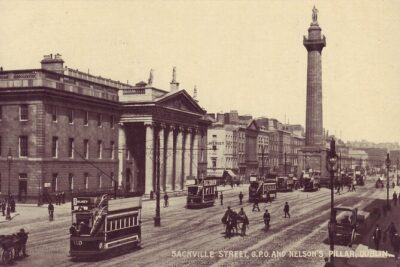

Historical 2-Hour Guided Walking Tour of Dublin
Read our review →
Dublin Traditional Irish 3 Course Meal Walking Tour with Local
Read our review →
Browse the lists this tour appears in