
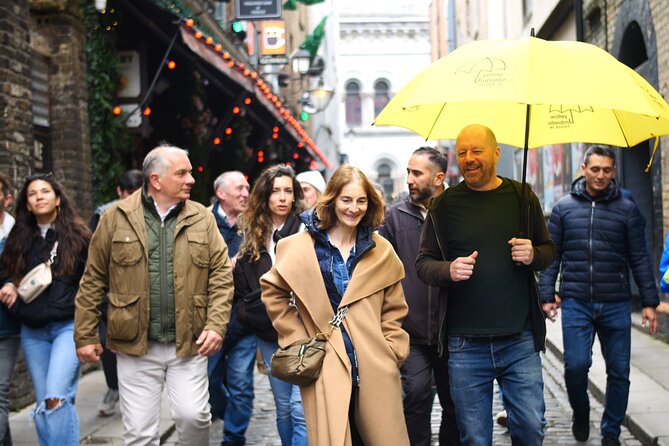
Reviewed · WALKING TOURS
Small Group Bucket List Sights Walking Tour with a Local Guide
This is one of those Dublin walks that feels simple on paper but rewarding in the real world, because it links big landmarks with the stories behind them, from Viking-era origins to modern bridges over the Liffey. You get a small group format and a local guide who ties the sites together instead of reading a list.
I love how the route hits the emotional center of Dublin fast, with Christ Church Cathedral, St. Patrick’s Cathedral, and Trinity College all in one stretch. You’ll also get plenty of room to ask questions, and the pace is designed for people who want a morning that moves without feeling like a sprint. A possible drawback is that the tour is packed with stops and exterior viewpoints, so if you want long museum-style time inside buildings, you’ll still need to plan separate visits.
Key highlights at a glance
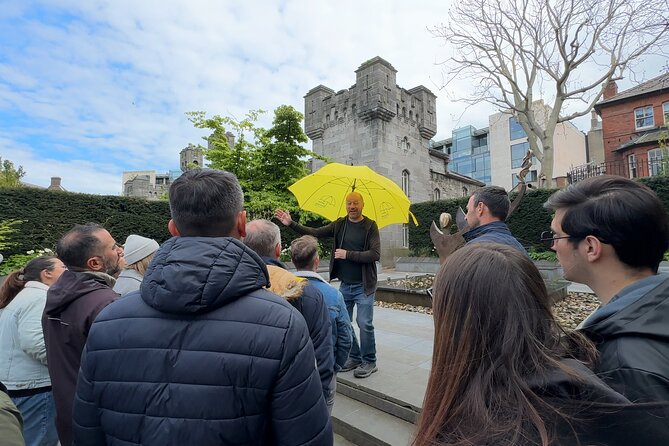
- Small group size (max 25) makes questions and conversation actually work.
- Two hours gives you a useful orientation without eating your whole day.
- Major Dublin anchors include Christ Church, St. Patrick’s, Dublin Castle, Temple Bar, and Trinity College.
- Smart contrast stops, like Merchant’s Arch vs. Stephenson Tower, help you see Dublin’s mix of old and new.
- Great bridge views across the Liffey, with quick context for what you’re looking at.
- Free stops along the way, including Dubh Linn Gardens and several central squares.
A 2-hour Dublin highlights walk that actually helps you plan the rest
Dublin can feel a bit like two cities at once. You’ve got sacred stone, political power, and old lanes that still smell like the past. Then you turn a corner and there’s a modern skyline mood. This tour works because it gives you a tight route through that mix, with short stop times that keep you moving while still letting you understand what you’re seeing.
The format is also practical. You start at Wood Quay and finish at Trinity College’s College Green area. That’s a helpful arc. By the end, you’re standing where you can easily decide what to do next, whether that means a deeper look at Trinity, a walk toward the river, or a pub break.
And yes, tickets for some sites are not included, so you’re not going to treat this like a full admissions day. Instead, think of it as the fastest way to get the city’s “why” behind the “what.”
More Walking Tours in Dublin
- Dublin Highlights and Hidden Gems Guided Walking Tour
★ 5.0 · 6,020 reviews - Dublin: Highlights and Hidden Gems Walking Tour
★ 4.9 · 2,140 reviews - 1916 Rebellion Walking Tour
★ 5.0 · 1,605 reviews
Starting at Wood Quay, then stepping into early Dublin stories
You begin near 121 R137, Wood Quay at 10:00 am, and from the very start the tour’s theme comes through: Dublin wasn’t built in one era. It was layered.
That matters because your first big stop, Christ Church Cathedral, is tied to an origin story that reaches back to Viking Dublin. Even before you reach the cathedral doors, your guide’s framing makes the rest of the walk click. You stop seeing each building as a standalone photo opportunity, and start seeing the city as a timeline.
If you like walking tours that give context you can actually use, this one fits. It’s also a good option if you’re arriving in Dublin and want to understand the city center layout without map fatigue.
Christ Church Cathedral: Viking wood, Norman stone, and whiskey-era renovations
Christ Church Cathedral is the kind of site where the details are doing half the work for you. You’ll hear how it began with Vikings building in wood, then shifted to Normans recasting it in stone. That’s not just trivia. It’s a reminder that Dublin’s religious landmarks are tied to power and migration waves.
Then the story takes an Irish turn with the 19th-century renovation credited to whiskey money. That is such a Dublin detail that it changes how you look at the place. Suddenly it’s not only medieval and solemn, it’s also shaped by the economic story of Ireland centuries later.
What to watch for on this stop: treat it like a quick orientation moment. You’re not meant to linger for hours, but you should take a few minutes to look at the scale and the mix of eras. When your guide connects those layers to the wider city, the cathedral becomes a “map marker” for Dublin’s shifts in control.
St. Patrick’s Cathedral and the Guinness renovation story
Next comes St. Patrick’s Cathedral, named for Ireland’s patron saint and linked to the well-known story about driving snakes off the island. Even if you know the legend already, it works here because it sets up why this cathedral mattered.
The standout detail is the renovation by the Guinness family, specifically Sir Benjamin Lee Guinness, in the 1860s. Again, you’re seeing how Dublin’s most important buildings can be shaped by the city’s real-world money and influence, not just distant history.
This stop is a good reminder that religion, politics, and business have often shared space in Dublin. The cathedral is not just a backdrop. It’s an example of how one family helped reshape a public symbol.
If you’re short on time, this stop gives you a lot of meaning quickly. If you’re the type who wants silence and space, you might find the group rhythm keeps your experience brisk, but the stop is designed to stay manageable.
If this is not quite it, Dublin also does these:
- Dublin to Cliffs of Moher, including Wild Atlantic Way and Galway
★ 5.0 · 23,331 reviews - From Dublin: Cliffs of Moher, Burren & Galway City Day Tour
★ 4.8 · 18,888 reviews - Dublin: Guinness Storehouse Entry Ticket
★ 4.6 · 16,863 reviews - Dublin to Cliffs of Moher, Burren, Wild Atlantic Way, Galway Tour
★ 5.0 · 12,924 reviews
Dubh Linn Gardens: where the Vikings moored and where you can exhale
At Dubh Linn Gardens, the tone shifts from grand cathedral energy to a quieter, more tucked-away pause. This is where the tour connects the setting to the Chester Beatty Library area and the 9th-century arrival story.
You’ll hear that Vikings moored their long boats here when they arrived in Dublin. That detail makes the garden feel purposeful rather than just pretty. You’re standing in a space tied to the moment Dublin became a place outsiders came to, not only a place locals lived.
A major value point: Dubh Linn Gardens is free at this stage. Even if you don’t go inside anywhere, the garden stop gives you something important on a walking tour: a break in pace. It’s one of the places where you can reset your attention before the next concentration of landmarks.
Dublin Castle: seven centuries of power, wrapped in mixed architecture
Then you hit Dublin Castle, described as the center of British government in Ireland for 700 years. That single fact changes the way you interpret the surroundings. You’re no longer just looking at a pretty complex. You’re in the shadow of centuries of administration.
The guide also frames Dublin Castle as an architectural mash-up, mixing medieval, Georgian, Gothic, and modern elements. That mix is exactly why this stop is worth including on a short walk. You see how power doesn’t just govern laws, it shapes stone, style, and space.
Admission tickets are not included here, so treat this as an exterior and storytelling stop. If you later want to go deeper, Dublin Castle is one of those places where ticketed access can make sense because the rooms and exhibits can expand the context your guide sketches outside.
City Hall and the national flag: a street-level lesson in symbolism
Beside the City Hall, just outside the front gate of the castle area, you’ll talk about the significance of the national flag. The explanation focuses on the idea of peace between Catholic and Protestant, North and South.
This stop is easy to overlook when you’re in photo mode, but it’s one of the most useful “why this matters” moments in the whole walk. Dublin’s landmarks can feel like they belong to old books until someone explains how they connect to real identity and real history.
If you’re visiting with teens or you want to help people understand Ireland beyond pubs and postcards, this is a strong moment to lean in and listen.
Temple Bar to Merchant’s Arch: Tudor-era layout and a city of contrasts
From the castle area you move toward Temple Bar, one of the oldest parts of Dublin, now famous for lively pubs and nightlife. Your guide doesn’t just tell you it’s famous. You’ll hear how the area was laid out during the Tudor conquest of Ireland.
That’s a smart connection. It reframes Temple Bar as a city-planning story, not only a nightlife story. When you see the streets after, they make more sense. You start to notice how history leaves patterns that still influence where people gather.
Then the walk pushes into Merchant’s Arch, where Dublin is described through contrast. At one end you have Crown Alley with Merchant’s Arch. At the other end you face Stephenson Tower, a brutalist tower that looks like it belongs in a different decade, or even a different country.
This contrast stop is valuable because it gives you a mental model for modern Dublin: the old center never disappears, it keeps negotiating with what comes next.
Millennium Bridge and Ha’penny Bridge: crossing the Liffey with real context
No Dublin walk feels complete without the river. Here, you cross the Liffey first at Millennium Bridge. From there, you’ll take in city views with two time anchors: to the east, Celts built a settlement about 2,100 years ago, and to the west, you hear about the Americans inspiring the Silicon Docks about 21 years ago.
That’s a striking way to frame a view. You’re not just looking at water and skyline, you’re looking at layers of settlement, trade, and global ambition. In two hours, it’s one of the best “how time changes cities” lessons you’ll get.
Then you cross back over Ha’penny Bridge. You’ll learn it was originally named after the Duke of Wellington, and you’ll also hear the detail about Harland and Wolff helping ensure the bridge no longer shakes when you walk over it.
I love that kind of practical story. It turns an icon into something you can feel. You know what you’re standing on, and why it got fixed when it needed fixing.
If you’re the type who enjoys small “fun facts” that connect to bigger stories, these bridge moments are worth paying attention to rather than rushing past for selfies.
College Green to Molly Malone: finishing near power, then meeting Dublin’s best-known character
As you shift toward College Green, you’re back in government and finance territory. This area is described as the center of decision-making for a city that considered itself the 2nd city of the empire. You’ll also see beautiful buildings around the square, including banks and parliament-like institutions.
This stop gives your walk a strong payoff. You started with religious authority, moved through administrative power at Dublin Castle, and now you’re seeing where money and government sit in the same space.
Next comes Molly Malone Statue, the familiar figure that makes you smile because she’s part folklore, part Dublin identity. No complicated explanation needed. It’s a stop that helps you feel like you’ve completed the classic highlights.
Ending at Trinity College Dublin: the Book of Kells connection and your next step
The tour concludes outside Trinity College Dublin, at the Fox House, 37 College Green meeting point. Even if you don’t enter, you’re positioned at a key cultural hub.
You’ll hear that Trinity is home to the Book of Kells exhibition. That’s a clear next-step suggestion, and it helps you decide whether to add a ticketed visit after your walk while you’re already in the right neighborhood.
Because the tour ends here, it’s also a smart plan if you want to build an efficient day. You can keep your morning structured, then turn the afternoon flexible.
What you can expect from the guide and the walking pace
A consistent theme in the experience is that the guides bring personality and energy. People have been led by guides including Peter, Martin, and Rob, and the common thread is clear: lots of Q&A, and answers that connect sites to the wider story of Ireland.
Stop timing is also built into the flow. Each main landmark gets about 10 minutes, which keeps things moving. The good news is you’re not forced into a nonstop march. The better news is you often get enough time to ask at least one good question while your guide is still fresh on that subject.
If you love short, focused history that sticks to the street, this is your style.
If you’re a slow walker or you want extended time to sit inside major buildings, you may need to supplement this with a longer standalone visit later.
Price and value: $20.52 for a two-hour city orientation
At $20.52 per person for about two hours, this walk is priced like an efficient city orientation. You’re paying for two things: a route that covers the center’s most important anchors, and a guide who explains what those anchors mean.
Here’s where the value becomes real. You’re getting multiple landmarks in a single morning block, including sites where admission is not included. That means your money goes to interpretation and navigation, not waiting in ticket lines or spending hours inside.
You do get a couple of free stops along the way, including Dubh Linn Gardens and several exterior viewpoints like the City Hall area and parts of College Green. Even with not-included admissions at key cathedrals and historic buildings, the walk still earns its keep because it helps you choose what to see next.
Also, with a maximum of 25 people, the group size stays small enough for questions to land, which is often where the real value lives on a guided walk.
One more practical note: this experience is booked on average 61 days in advance, which is a polite hint that popular times can fill up. If you have a tight schedule, don’t wait until the last minute.
Who this tour suits best (and who might prefer a different plan)
This tour is a good match if you:
- want a fast, coherent introduction to central Dublin
- like walking between major stops without spending your whole day in lines
- enjoy stories that connect religion, politics, and everyday city life
- want help figuring out where to go next once you’re near Trinity
It’s also a smart move for your first morning in Dublin. By the time you end on College Green, you’ll feel like you know where you are and why those streets got shaped the way they did.
You might want a different format if you:
- want to spend most of your time inside major cathedrals or museums, since this is built around brief exterior stops
- prefer a slow tour with long rests at each site rather than a steady rhythm
Should you book this Small Group Bucket List Sights Walking Tour?
If you’re visiting Dublin for a short trip and you want your bearings fast, I think this is an easy yes. The route covers the highlights that most first-timers want, but it also explains the in-between stuff: Vikings mooring stories, Guinness renovations, the meaning behind the national flag, and why Dublin looks like it does when you cross the river.
The small group size and the clear emphasis on questions make it feel more like a conversation than a lecture. And ending at Trinity College keeps your next steps simple.
If you enjoy walking and you’re okay with quick stops, book it early, bring comfortable shoes, and plan on using what you learn to guide the rest of your Dublin day.
FAQ
How long is the Dublin walking tour?
It runs for about 2 hours.
What is the group size limit?
The tour has a maximum of 25 travelers.
Are admission tickets included for the stops?
Some stops are free, like Dubh Linn Gardens and certain central areas. For several major landmarks, admission tickets are not included, so you may need separate tickets if you want to enter.
Where do I meet, and where does the tour end?
You start at 121 R137, Wood Quay, Dublin, Ireland and you end at Fox House, 37 College Green, Dublin 2, Ireland (outside the front gate area of Trinity College).
What time does the tour start?
The start time is 10:00 am.
What language is the tour offered in?
The tour is offered in English.
Is free cancellation available?
Yes. You can cancel for a full refund up to 24 hours before the experience’s start time.
Newest Dublin reviews
- Giants Causeway with Private Chauffeur Day Tour from Dublin★ 5.0 · 23 reviews
- Dublin Private Walking Tour | 3 hour Highlights & Hidden Gems★ 5.0 · 23 reviews
- Taste traditional Irish food in the heart of Dublin★ 5.0 · 24 reviews
- From Dublin:Cork,Cahir Castle,Rock of Cashel Tour in Spanish★ 4.5 · 24 reviews
- 4 Hour Private Dublin City Sightseeing Tour ( 1-7 People)★ 5.0 · 25 reviews
- Scogliere di moher e Galway in italiano★ 4.5 · 25 reviews
- Dublin: Forge Your Own Silver Claddagh Ring Workshop★ 5.0 · 25 reviews
- Luggage Storage Dublin★ 5.0 · 26 reviews
Walking Tours, compared.
Dublin Highlights and Hidden Gems Guided Walking Tour
Read our review →


90 Minute Dublin Walking tour and Sightseeing tips
Read our review →

Historical 2-Hour Guided Walking Tour of Dublin
Read our review →
Dublin Traditional Irish 3 Course Meal Walking Tour with Local
Read our review →
Browse the lists this tour appears in