
Reviewed · WALKING TOURS
Small Group-Dublin Walking Tours
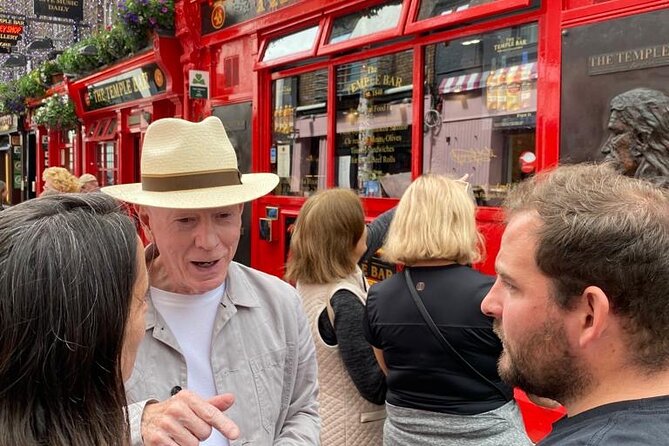
Dublin can feel like a maze when you first arrive, so I like tours that give you a fast, human map of the city. This one starts in the Dublin Castle area, then threads through landmark churches, Temple Bar, bridges, and Trinity College, ending at Powerscourt Townhouse Centre.
Two things I really like: the small group size (maximum 8) and the way Damian uses music and storytelling to keep you engaged without turning it into a lecture. You’ll hear connections between places you may not realize are linked, including Viking-era roots, Handel’s Messiah connection, and the 1916 Easter Rising setting.
One possible drawback: it is a walking tour on cobblestones, so if you have knee or mobility trouble, you’ll want to pace yourself and plan for uneven ground.
Key highlights worth your attention
- Maximum 8 people, so you actually get chances to ask questions and react to the route
- Damian Dublin Tours brings music and light skits that match the sights
- Chester Beatty and Dublin Castle start with Dublin origin stories in easy-to-reach gardens
- Temple Bar to Ha’penny Bridge, a quick crash course on trade, travel, and city energy
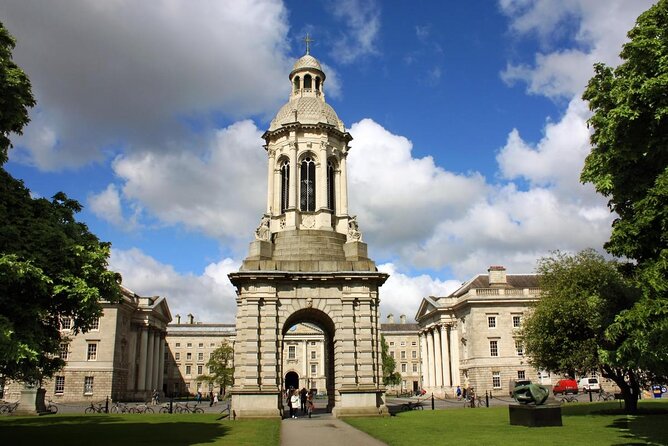
- Trinity College courtyard views plus famous names you can connect to later
- End at Powerscourt Townhouse Centre, a handy central finish with cafés and shopping
A first-day Dublin walk that actually helps you plan
If this is your first day in Dublin, I think a 2-hour walk is one of the best time buys you can make. You get your bearings on foot, you learn which areas feel alive versus quiet, and you leave with a clearer idea of where to return for a longer stop.
This tour is priced at $60.47 per person, and that number makes more sense when you consider what you are buying: an organized route through the city center, a guide who ties multiple eras together, and a small group format that keeps the conversation moving. For the money, you are paying for time saved and for someone else doing the stitching between streets and stories.
The pace is quick enough to be rewarding, but it is also kept friendly. In real feedback I saw, people especially praised the “fast paced” feel plus room for questions, and even help for a guest with a hip issue. So yes, you will walk, but it is not a sprint.
More Walking Tours in Dublin
- Dublin Highlights and Hidden Gems Guided Walking Tour
★ 5.0 · 6,020 reviews - Dublin: Highlights and Hidden Gems Walking Tour
★ 4.9 · 2,140 reviews - 1916 Rebellion Walking Tour
★ 5.0 · 1,605 reviews
Meeting at Dublin Castle and warming up in the gardens
You start in the Dublin Castle area, at the Chester Beatty Library location behind or near Dublin Castle grounds. The listed meeting point is Dublin Castle, Chester Beatty Library, Castle Street, Dublin 2 (D02 AD92). You end at Powerscourt Townhouse Centre, 59 William Street South, Dublin 2 (D02 HF95), located between South William Street and Clarendon Street.
Why I like this setup: it keeps you out of the chaos of trying to find a tour near Temple Bar first thing. You begin close to major landmarks, in the calmer Dubh Linn Garden area. That matters because it lowers the stress of arrival day and gives you an easy mental start point.
At the start, Damian outlines the route and sets expectations. You are not just being marched from photo spot to photo spot. Instead, you get a sense of what themes the walk will cover, so each next stop lands with context instead of feeling random.
Chester Beatty Library: Dublin’s beginnings get human-scale
The tour begins at Chester Beatty, right in the gardens setting. The stop is short, about 10 minutes, and it is marked as admission ticket free.
What makes this first leg work is that it is not a hard sell on any one building. Damian uses the setting around Dublin Castle and the Dubh Linn Garden area to explain the origins of the name Dublin, plus how the early landscape shaped the city. That is a nice trick: you start with the story of place before you start seeing the city’s most photographed structures.
If you like learning how cities got their names and why early geography mattered, you will feel ahead of the game. Even if you are not a major history person, this “why Dublin is Dublin” intro helps everything later snap into place.
Dublin Castle gardens: the city’s name and its early landscape
The second stop keeps you in the Dublin Castle grounds, focusing on the gardens. Again, it is a short visit, around 10 minutes, and it is also marked as admission ticket free.
Here, the payoff is in repetition with new angles. You’ll hear about the origins of Dublin again, but tied to what you can actually see around you. That helps you remember. It also keeps the tour grounded in real walking routes instead of being all classroom talk.
A practical note: you will cover cobblestones and compact streets throughout. This is exactly the moment to remember the most common advice for Dublin walking tours, comfy shoes. If your feet are happy, the rest of the route feels easier.
If this is not quite it, Dublin also does these:
- Dublin to Cliffs of Moher, including Wild Atlantic Way and Galway
★ 5.0 · 23,331 reviews - From Dublin: Cliffs of Moher, Burren & Galway City Day Tour
★ 4.8 · 18,888 reviews - Dublin: Guinness Storehouse Entry Ticket
★ 4.6 · 16,863 reviews - Dublin to Cliffs of Moher, Burren, Wild Atlantic Way, Galway Tour
★ 5.0 · 12,924 reviews
Christ Church Cathedral pass-by: Vikings and Handel in one line
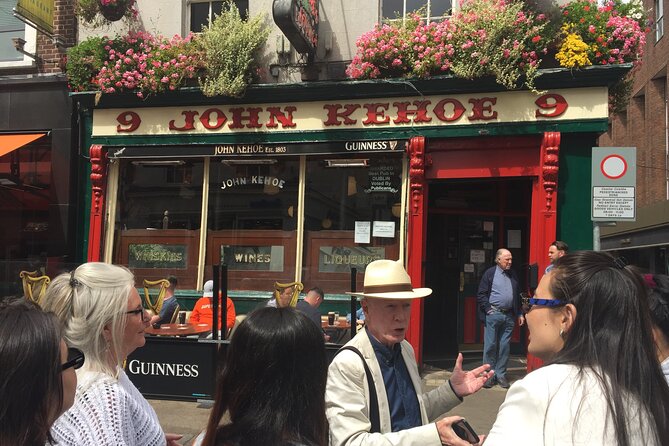
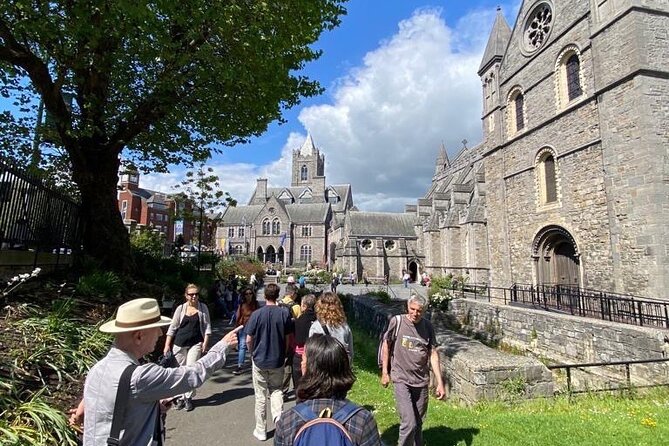
Next you pass along Christ Church Cathedral for about 10 minutes. The stop is admission ticket free and it includes two big ideas.
First, Damian covers the history of the Catholic Church in Ireland, which you will feel echoed later in how religious landmarks shaped the city. Second, you get a view of the venue connection to Handel’s Messiah, described as the place where it was first performed.
Then he ties in the deeper timeline, from the Viking invasions from the north and the lasting legacy those events left behind. I like this approach because it prevents the city from being stuck in a single era. You see one spot, you learn multiple time layers, and you keep moving.
Temple Bar, Ha’penny Bridge, and how trade moved people
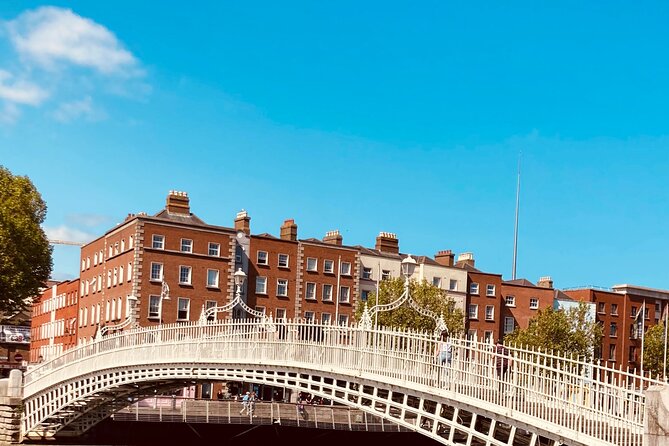
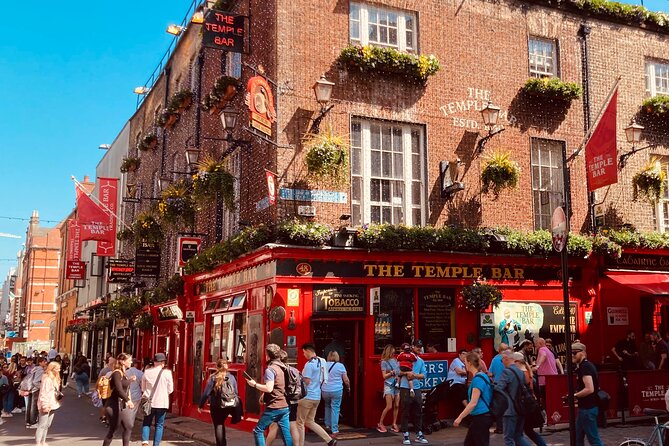
Then comes Temple Bar, where the tour spends about 15 minutes. You cross or pass through the area known for Dublin nightlife, live music, and the kind of street scene where people linger.
Instead of treating Temple Bar like a party-only zone, the walk frames it as a foundation for city movement. You then cross Ha’penny Bridge, and you learn about the foundations of the city and the evolution of trade and travel around the town centre.
This is a smart stop for first-timers because it teaches you how to interpret what you’re seeing. If you only treat Temple Bar as loud bars and souvenirs, you miss the city logic underneath. Here, you start understanding why this part of Dublin became a meeting point.
One word of advice: if you are sensitive to noise, Temple Bar can feel intense. The good news is this tour does not spend hours there. It gives you the vibe, explains it, and moves on.
O’Connell Bridge and the 1916 Easter Rising viewpoint
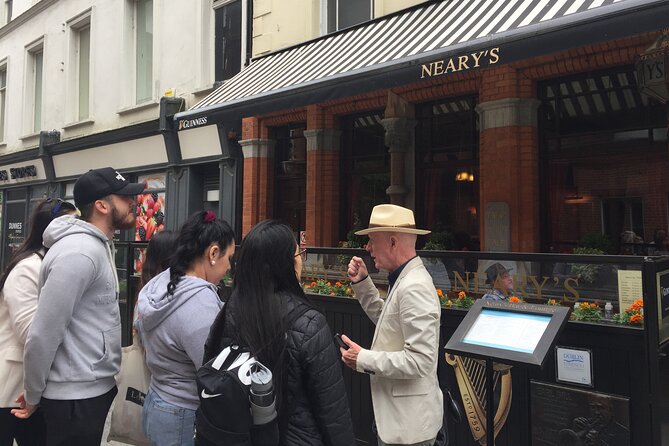
Next is O’Connell Bridge, about 10 minutes, admission ticket free. The tour focuses on the epicenter of the 1916 Easter Rising rebellion and offers a look at the statue of Daniel O’Connell.
Why this stop matters is the way it shifts Dublin from older roots to modern identity. You learn about the river Liffey, plus stories like the famous Liffey Swim. Those details sound small, but they help you understand how Dubliners talk about their city and why the river shows up so often in everyday culture.
Also, bridges are great for walking tours because they act like natural checkpoints. You can look both ways, reset your bearings, and then continue on with less mental effort.
Trinity College courtyard: famous alumni without the overwhelm
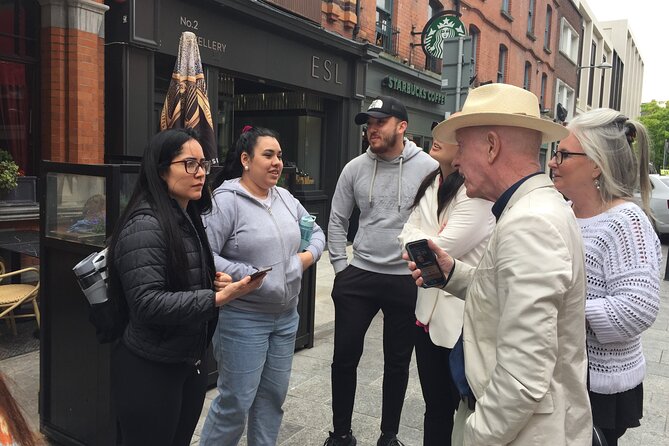
After the bridges, you reach Trinity College Dublin. This stop is around 10 minutes, admission ticket free, and you get views of the university and how many well known historical figures studied there.
You can enter the courtyard of the university grounds for a short look at the original architecture. This is one of those “short but meaningful” moments. You get the feeling of the campus without committing to a long museum-style visit.
The tour also catches a view of House of Lords, called Parliament House on Dame Street. I like that pairing because it reminds you the same city streets can hold both academic prestige and political power. You’ll recognize the contrast as you keep walking later on your own.
Bram Stoker and the walk toward Leinster House
Then the tour heads to St Anne’s Church on Dawson Street for about 10 minutes, admission ticket free. Damian talks about Bram Stoker’s wedding there, connecting Dublin writing lore to a real physical address.
From there you move toward Bewley’s Café on Grafton Street. The tour does not turn into a long food stop, but it positions you in a classic Dublin hangout corridor that makes sense for later breaks.
Next up is Leinster House, reached by walking along Kildare Street. The stop is about 10 minutes, admission ticket free. Damian ties in Irish Parliament history and even the connection relationship to the White House in Washington, DC. You also pass by the National Museum of Archaeology along the way.
This is where the tour feels like more than sightseeing. You start seeing Dublin as a network: literature to law, buildings to institutions, and street names to meaning. If you plan to do more self-guided exploring later, this is exactly the kind of mental framework that makes it easier.
St Stephen’s Green and the Grafton Street stop you’ll remember
After Leinster House, the tour reaches St Stephen’s Green with about 15 minutes. This stop pulls in a few different elements at once: Grafton Street shopping energy, a passing look at the Royal College of Surgeons, Georgian-era architecture, and the city park setting.
I like this mix because it gives you a contrast. You’ve been in political and religious zones. Now you get a green pause that helps the city feel livable. Even a short glance at parks and older streets makes a walking trip feel more balanced.
If you want to keep the learning momentum after the tour ends, Grafton Street is a great place to do that. You’ll already know where you are and what you just saw.
Powerscourt Townhouse Centre: a strong ending point
The walk finishes at Powerscourt Townhouse Centre on South William Street. The stop is about 10 minutes, admission ticket free.
This is a fun ending because it is practical. The atrium setting is a nice place to regroup, and it includes upscale and boutique shopping plus a café or restaurant option. Since the tour ends here, you are not stranded at some random edge of town. You finish near a lively corridor with plenty of choices for what to do next.
Also, ending at Powerscourt is a psychological win. After walking through Dublin’s big stories, it feels good to end in a place that feels like Dublin’s everyday rhythm, shopping and chatting, rather than only monuments.
What the guide style adds, music, questions, and small touches
A lot of walking tours claim they are fun. This one is specifically built around that idea. Damian is repeatedly described as engaging, entertaining, and friendly, with music matching the sights and even some skits. That matters more than it sounds.
When music fits the atmosphere of a street, you remember more. When the guide includes humor or performance bits, the facts stick because you were paying attention. And when the tour is tailored to the group, you spend your short time in Dublin on what you actually care about.
I also like that the small size creates an informal feel. One family mentioned the tour worked for kids around ages 11 and 13. Someone else said Damian adjusted to their schedule for a layover. Another person praised how considerate Damian was for a hip problem. So this does not come off as rigid. It is guided, but not stiff.
Price and value: what $60.47 buys you in time saved
At $60.47 per person for about 2 hours, the best way to judge value is what you get compared to doing this yourself.
If you tried to DIY this route, you would still see many of the same landmarks, but you would likely lose the connections. The real value is that Damian ties together Dublin’s early origins, Viking legacy, religious history, and key political moments like the 1916 Easter Rising. You also get music and a pace that keeps the group from feeling stuck or bored.
For me, this kind of tour is worth it when you want a strong first day. You pay to reduce planning time, and you leave with direction for the rest of your trip.
Who should book this Dublin walking tour
This tour is a great fit if:
- You want a first-time orientation to central Dublin without committing to a long day
- You like guided stories tied to real streets, not just facts read from a plaque
- You appreciate small-group pacing and the chance to ask questions
- You plan to come back to a few areas later, after you learn the city basics
If you hate walking on uneven ground, you might want to choose a more vehicle-friendly option. And if you need step-free access details, the data here only says most travelers can participate and service animals are allowed, so you would want to confirm specifics with the provider before booking.
Should you book? My honest take
If you are spending limited time in Dublin, I would book this. The route is logical, the guide style is engaging, and the small group format keeps it from feeling crowded or rushed. Starting at Dublin Castle keeps arrival stress low, and ending at Powerscourt gives you an easy place to continue your day.
I would skip it only if you know you cannot handle a cobblestone walking route or if you already feel confident navigating central Dublin and want a deeper, single-site focus instead.
FAQ
How long is the Small Group Dublin Walking Tour?
The tour runs about 2 hours.
How many people are in the group?
The tour has a maximum of 8 travelers.
Where do I meet the guide and where does the tour end?
You start at Dublin Castle and the Chester Beatty Library area (Castle Street, Dublin 2). You end at Powerscourt Townhouse Centre (59 William Street South, Dublin 2).
Is admission required for the sights on the route?
The stops are listed as admission ticket free.
Is the tour offered in English?
Yes, the tour is offered in English.
What should I wear for this walking tour?
Wear comfy shoes, since you walk along cobblestone streets.
Are service animals allowed?
Yes, service animals are allowed.
What is the cancellation policy?
You can cancel for a full refund up to 24 hours before the experience start time. If you cancel less than 24 hours before, the amount paid is not refunded.
Newest Dublin reviews
- Dublin: Traditional Pubs Walking Tour with Local Guide★ 4.9 · 112 reviews
- Dublin: Cliffs of Moher, Ennis, & Bunratty Castle Day Tour★ 4.9 · 113 reviews
- Meet and Eat Dublin: Dublin Food Walking Tour★ 5.0 · 115 reviews
- A Silent Disco Walking Tour★ 5.0 · 118 reviews
- 3-Day Southern Ireland Tour Including Galway and Kerry from Dublin★ 4.5 · 123 reviews
- From Dublin: Wicklow, Glendalough, Waterfall & Sheepdog demo★ 4.5 · 126 reviews
- Dublin: Guinness Storehouse Connoisseur Experience★ 4.8 · 123 reviews
- Dublin Private Walking Food Tour With Locals with 10 Tastings★ 4.5 · 130 reviews
Walking Tours, compared.
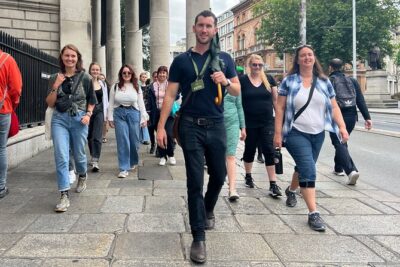
Dublin Highlights and Hidden Gems Guided Walking Tour
Read our review →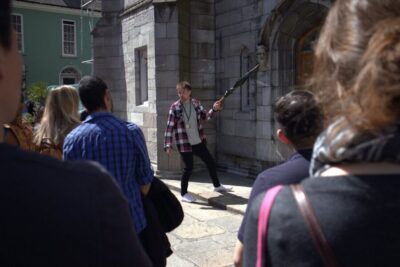


90 Minute Dublin Walking tour and Sightseeing tips
Read our review →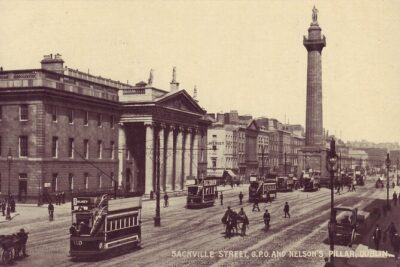

Historical 2-Hour Guided Walking Tour of Dublin
Read our review →
Dublin Traditional Irish 3 Course Meal Walking Tour with Local
Read our review →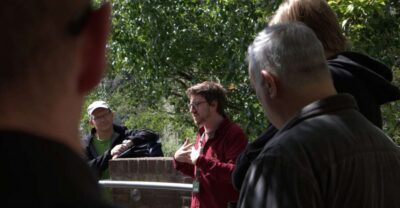
Browse the lists this tour appears in